
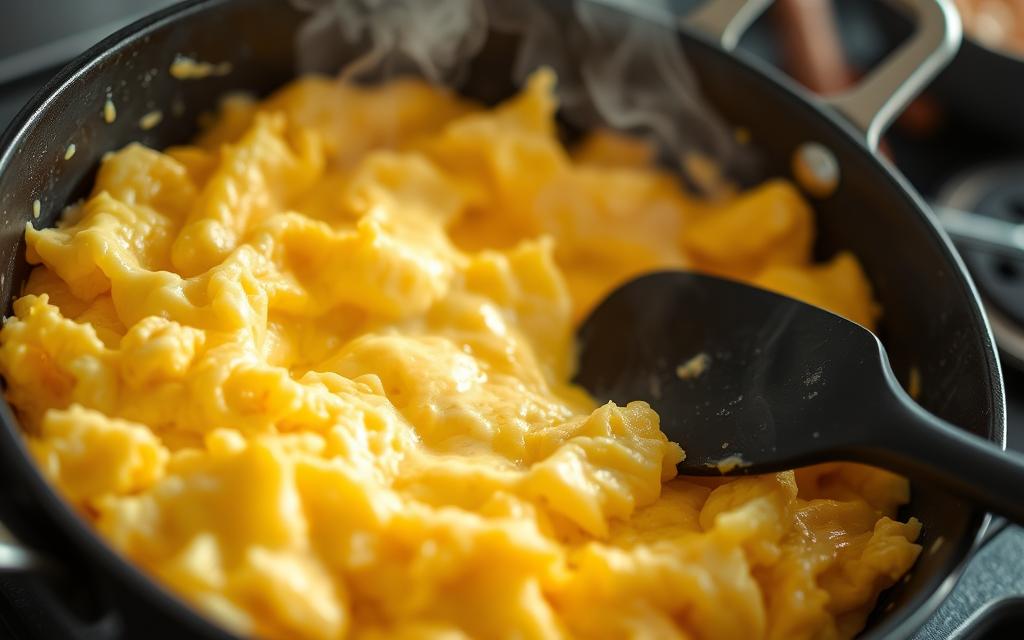
Ever wondered why your scrambled eggs are dry or rubbery? The secret is simple. It’s about how you prepare and cook the eggs.
Learning to make perfect scrambled eggs is easy. You just need to be precise, patient, and know a few tricks. This guide will make your scrambled eggs amazing.
Professional chefs say making fluffy scrambled eggs is an art. It’s not just about mixing eggs in a pan. It’s about the technique, controlling the heat, and how heat changes the eggs.
Key Takeaways
- Whisking eggs vigorously creates a more uniform texture
- Use butter instead of milk for creamier eggs
- Cook eggs slowly over medium-low heat
- Avoid overcooking to maintain a tender texture
- Fresh herbs can dramatically enhance flavor
- Choose the right pan for optimal cooking results
Understanding the Basics of Scrambled Eggs
Scrambled eggs are a classic breakfast staple. They can turn simple ingredients into a delightful meal. Learning how to make scrambled eggs is key to making a perfect dish every time.
Scrambled eggs are beaten eggs cooked in a pan. The magic of a simple scrambled eggs recipe is in the technique and detail during preparation.
What Are Scrambled Eggs?
Scrambled eggs are a versatile dish. They are made by whisking raw eggs and cooking them gently while stirring. The goal is to make soft, creamy curds that are light and flavorful. Both professional chefs and home cooks love this simple dish.
Different Styles of Scrambled Eggs
Scrambled eggs come in various styles. Each style offers a unique texture and eating experience:
- American Diner-Style: Large, firm curds cooked over slightly higher heat
- French-Style: Small, delicate curds prepared with gentle, continuous stirring
- Soft Scramble: Barely set eggs with barely perceptible curds, almost custard-like in texture
The key to mastering a simple scrambled eggs recipe is understanding different cooking methods and stirring techniques. Gentle heat and careful attention are key for the perfect scramble.
Choosing the Right Eggs
Getting the best scrambled eggs starts with picking the right eggs. Not all eggs are the same. Knowing the differences can make your breakfast better.
Types of Eggs
Looking for the best eggs for scrambling? Here are some top picks:
- Free-range eggs: Chickens with outdoor access make eggs taste richer
- Organic eggs: Raised without bad stuff, they’re better for you
- Large eggs: Perfect size for most recipes
- Farm-fresh eggs: Have deeper yellow yolks and taste stronger
Egg Freshness Matters
Egg freshness really matters for great scrambled eggs. Here’s how to check:
- Look at the expiration date on the carton
- Do the float test: Fresh eggs sink, older ones float
- Crack eggs one at a time to see if they’re good
Tip: Eggs that are two weeks old or less are best for scrambling. Older eggs spread more and don’t stay creamy.
| Egg Type | Flavor Profile | Best For Scrambling |
|---|---|---|
| Free-range | Rich, complex | Highest recommendation |
| Organic | Clean, pure | Excellent choice |
| Standard large eggs | Neutral | Good baseline |
Remember, the type and freshness of eggs are key to making perfect scrambled eggs. Every home cook wants that.
Essential Ingredients for Perfect Scrambled Eggs
Creating delicious scrambled eggs is more than just cracking eggs. The right ingredients make your breakfast special. They turn creamy scrambled eggs into a treat.
Dairy Choices: Enhancing Texture and Flavor
Choosing the right liquid is key when adding cheese or other dairy. Here are the best dairy options for creamy scrambled eggs:
- Whole Milk: Adds moisture and lightness (recommended ratio: 2 tablespoons per 3 eggs)
- Heavy Cream: Creates a luxurious, custard-like texture
- Water: Helps create lighter, fluffier eggs
Seasoning Scrambled Eggs: Flavor Boosters
Seasoning is important for a great egg dish. The right seasoning can make your eggs unforgettable.
| Seasoning Type | Flavor Profile | Best Used With |
|---|---|---|
| Salt | Enhances overall taste | Added before cooking to retain moisture |
| Freshly Ground Pepper | Adds mild heat | White or black pepper recommended |
| Cheese | Creamy, rich flavor | Cheddar, feta, or parmesan |
| Herbs | Fresh, aromatic notes | Chives, parsley, dill |
Pro tip: For the best scrambled eggs with cheese, add cheese at the end. This prevents overcooking and keeps them creamy.
Equipment You Will Need
Delicious scrambled eggs need more than just ingredients. The right tools and pan are key. Let’s look at what you need to cook great eggs.
Selecting the Best Pan for Scrambled Eggs
Finding the right pan is important for perfect scrambled eggs. A non-stick skillet or a well-seasoned cast-iron pan is best. For 2-3 eggs, a 7-8 inch skillet is perfect.
- Non-stick skillet (preferred for easy cleanup)
- Cast-iron pan (well-seasoned)
- Size: 7-8 inches for 2-3 eggs
Essential Cooking Utensils for Eggs
The right tools help prevent scratches and make egg prep smooth. Experts suggest using specific tools for the best results.
| Utensil | Purpose | Recommended Material |
|---|---|---|
| Spatula | Folding and stirring eggs | Silicone or heatproof |
| Whisk | Beating eggs thoroughly | Stainless steel |
| Mixing Bowl | Preparing egg mixture | Glass or stainless steel |
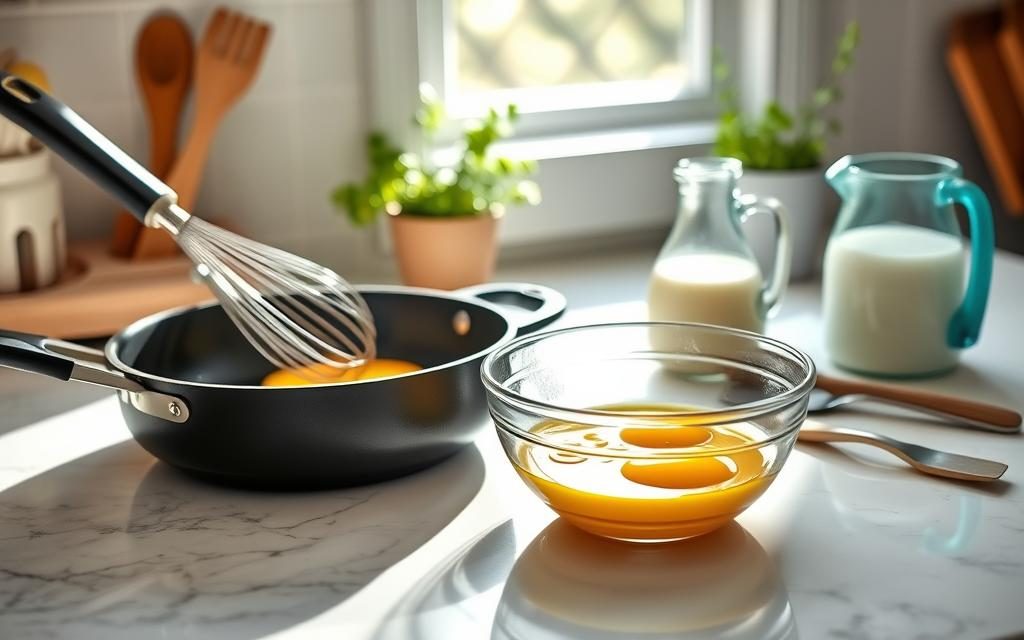
Pro tip: Avoid metal spatulas that can scratch your pan. A silicone spatula provides gentle movement and protects your cooking surface.
Additional Recommended Tools
- Measuring cups for precise ingredient quantities
- Timer for perfect cooking duration
- Cutting board for prep work
With the right tools, you can make restaurant-quality scrambled eggs at home. Quality tools can make your breakfast better.
Step-by-Step Guide to Making Scrambled Eggs
Learning to scramble eggs is a basic skill. It turns simple ingredients into a tasty meal. Whether you’re new or experienced, learning scrambled egg tips can make your breakfast better.
Cooking scrambled eggs needs careful technique and temperature. The right way can make eggs creamy and fluffy, not dry and rubbery.
Preparing the Eggs
Begin with fresh, high-quality eggs. For the best taste, use pasture-raised eggs with deep yellow yolks. Here’s a quick guide:
- Crack 6 large eggs into a mixing bowl
- Add 1/4 teaspoon kosher salt
- Add 1/4 teaspoon black pepper
- Whisk vigorously until light and frothy
Cooking Techniques
The secret to perfect scrambled eggs is managing heat and movement. Use a 10-inch nonstick or cast-iron skillet for the best results.
| Heat Level | Cooking Technique | Egg Consistency |
|---|---|---|
| Medium-Low | Gentle stirring | Creamy, soft curds |
| Medium | Frequent stirring | Firmer, larger curds |
Finishing Touches
Take eggs off heat when they’re slightly wet. They’ll cook more from the heat left. You can add:
- 1 tablespoon unsalted butter
- Chopped chives for garnish
- Optional mix-ins like grated parmesan, bacon bits, or herbs
Pro tip: Don’t add milk for fluffiness. Use gentle heat and whisk well for perfect scrambled eggs every time.
Temperature Control: Importance of Low-Heat Cooking
Learning to make low heat scrambled eggs is key to a great breakfast. The heat you use affects the eggs’ texture and taste.
Cooking eggs at low to medium-low heat helps avoid many mistakes. It’s all about managing the heat and cooking carefully.
Why Low Heat is Best
- Maintains creamy, soft egg texture
- Prevents tough, rubbery scrambled eggs
- Preserves delicate protein structure
- Ensures even, gentle cooking
Low heat cooks eggs slowly and evenly. This makes them silky smooth. It also keeps them moist and prevents them from getting too hard.
Avoiding Overcooking
- Use a low-temperature setting
- Stir eggs continuously
- Remove pan from heat when eggs are slightly underdone
- Let residual heat complete the final cooking
Experts say to use a non-stick pan or a well-seasoned skillet for perfect eggs. The trick is to be patient and control the heat gently.
Adding Flavor: Mix-ins and Toppings
Making scrambled eggs special is easy. Just add some mix-ins and toppings. You can make your egg recipes amazing.
Try new things to make breakfast better. Know when to add ingredients to your scrambled eggs with cheese.
Popular Ingredients to Consider
- Cheese varieties: Cheddar, goat cheese, Gruyere
- Vegetables: Tomatoes, asparagus, sautéed onions
- Proteins: Crispy bacon, smoked salmon
- Asian-inspired additions: Crispy brown rice, sesame oil
Herbs and Spices for Extra Flavor
Seasoning is key for great scrambled eggs. Use flaky sea salt and fresh pepper at the end. It makes a big difference.
| Herb/Spice | Flavor Profile | Best Paired With |
|---|---|---|
| Chives | Mild onion taste | Goat cheese |
| Paprika | Smoky warmth | Bacon, cheddar |
| Parsley | Fresh, bright | Cherry tomatoes |
Pro tip: Add cheese late to keep it smooth and melted. This way, it won’t get tough.
Scrambled Eggs Variations
Exploring egg dishes shows us many soft and fluffy scrambled eggs from around the world. Scrambled eggs are more than breakfast. They are a way to show off cooking skills from different places.
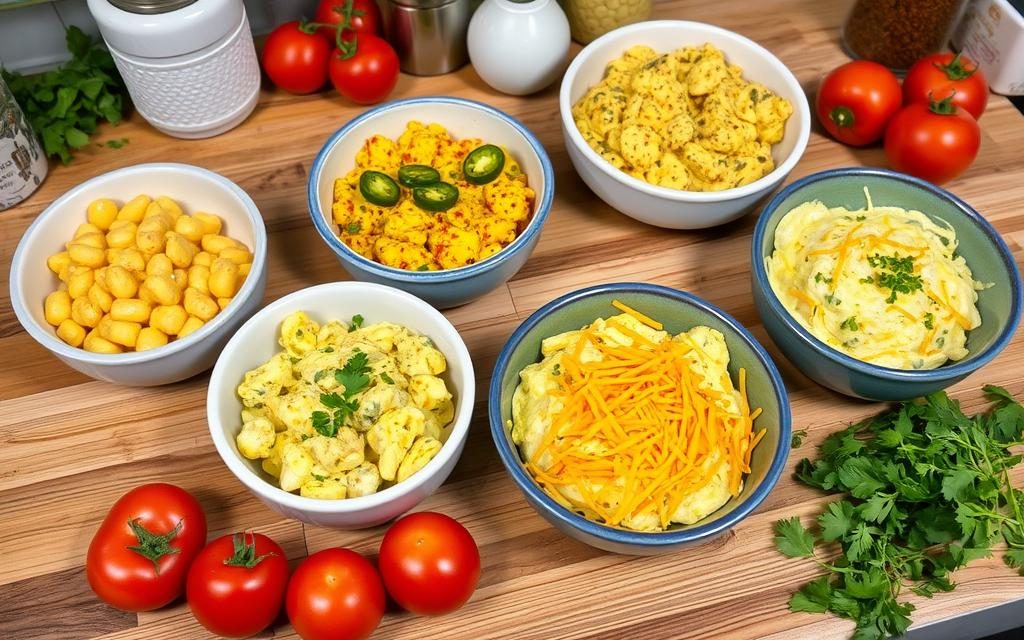
Creamy vs. Fluffy Scrambled Eggs
Scrambled eggs can be creamy or fluffy, depending on how you cook them. Creamy eggs need gentle heat and constant stirring. This makes them smooth.
Fluffy eggs, on the other hand, cook fast and with little stirring. They turn out big and light.
- Creamy eggs: Slow-cooked with constant stirring
- Fluffy eggs: Quick cooking with less manipulation
- Texture differences determined by heat and technique
Global Egg Dish Styles
Every culture has its own way of making scrambled eggs. French eggs are soft and custard-like. American eggs are firmer and chunkier.
International dishes add new flavors and ways to cook eggs. This makes scrambled eggs exciting and varied.
| Cuisine | Scrambled Egg Style | Unique Characteristics |
|---|---|---|
| Chinese | Tomato Egg Stir-Fry | Sweet and savory combination |
| Indian | Anda Bhurji | Spicy, heavily seasoned version |
| Mexican | Huevos Revueltos | Often served with chili and tortillas |
45% of people like yellow scrambled eggs. 30% prefer bigger curds. There’s no one right way to make scrambled eggs. They are perfect because they can be made many ways, to suit everyone’s taste.
Making Scrambled Eggs for a Crowd
Preparing scrambled eggs for many people is fun for cooks and breakfast fans. It’s great for family brunches or big events. You need a plan and the right ways to do it.
- Choose the right pan size for multiple servings
- Plan for approximately two eggs per person
- Prepare eggs in manageable batches
- Keep eggs warm without overcooking
Scaling Up Your Recipe
An 8×8 inch pan can hold up to 18 large eggs. A 9×13 inch pan can take 24 eggs. Convection ovens let you bake many pans at once. Keep the heat low to make the eggs tender and creamy.
Buffet Style Serving Tips
Set up a scrambled eggs station with mix-ins and toppings. Use chafing dishes to keep eggs warm. Let guests make their own plates.
Pro tip: Make eggs just before serving for the best taste and texture. Offer different seasonings, herbs, and ingredients to make your scrambled eggs fun and tasty.
Common Mistakes to Avoid
Learning how to make scrambled eggs can be tricky. It’s important to know the common mistakes. This way, you can avoid turning a simple dish into a mess.
Overcooking and Seasoning Challenges
Cooking scrambled eggs needs care. Many people cook eggs too hot, making them tough. Use low heat and take them off the pan when they’re almost done.
- Cook eggs for 2-3 minutes maximum
- Remove from heat when eggs are slightly underdone
- Salt eggs before cooking for better flavor
Equipment Errors to Sidestep
The right tools are key for making great scrambled eggs. Don’t use metal tools that can damage your pan.
| Wrong Equipment | Recommended Alternative |
|---|---|
| Metal spatulas | Silicone or wooden spatulas |
| Regular pans | Nonstick or well-seasoned cast iron |
| Whisks | Forks for gentler mixing |
Liquid and Mixing Mistakes
Adding the right amount of liquid is important. Avoid adding too much milk or cream, as it can make eggs too wet. Use just 1 tablespoon of liquid per egg and mix gently.
- Use chopsticks or forks for gentle stirring
- Incorporate air without over-mixing
- Stir constantly for even cooking
Knowing these mistakes will help you make better scrambled eggs. Keep practicing and you’ll get better with time.
Health Benefits of Scrambled Eggs
Scrambled eggs are more than a tasty breakfast. They are full of nutrients that can make you healthier. Eggs are called a superfood because they are so good for you.
Nutritional Powerhouse
One egg has lots of important nutrients. Eggs are very nutritious. Each egg gives you:
- 6 grams of high-quality protein with all nine essential amino acids
- Selenium, which supports immune function
- Phosphorus for bone health
- Choline for brain development
- Vitamin B12 for energy metabolism
Protein and Essential Nutrients
Scrambled eggs are good for more than just eating. They help with eye health and heart function.
| Nutrient | Benefit | Amount per Egg |
|---|---|---|
| Lutein & Zeaxanthin | Eye Health Protection | Reduces Cataract Risk |
| Omega-3 Fatty Acids | Heart Health | Reduces Triglycerides |
| Choline | Brain Function | 147 mg |
Eating eggs can lower heart disease risk by up to 20%. It’s important to eat them in moderation and use healthy fats like olive oil.
If you’re trying to lose weight, scrambled eggs are a great choice. They make you feel full longer. This can help you eat fewer calories during the day.
Storage Tips for Leftover Scrambled Eggs
Storing scrambled eggs right keeps them safe and tasty. It lets you enjoy your breakfast longer. It also stops food sickness.
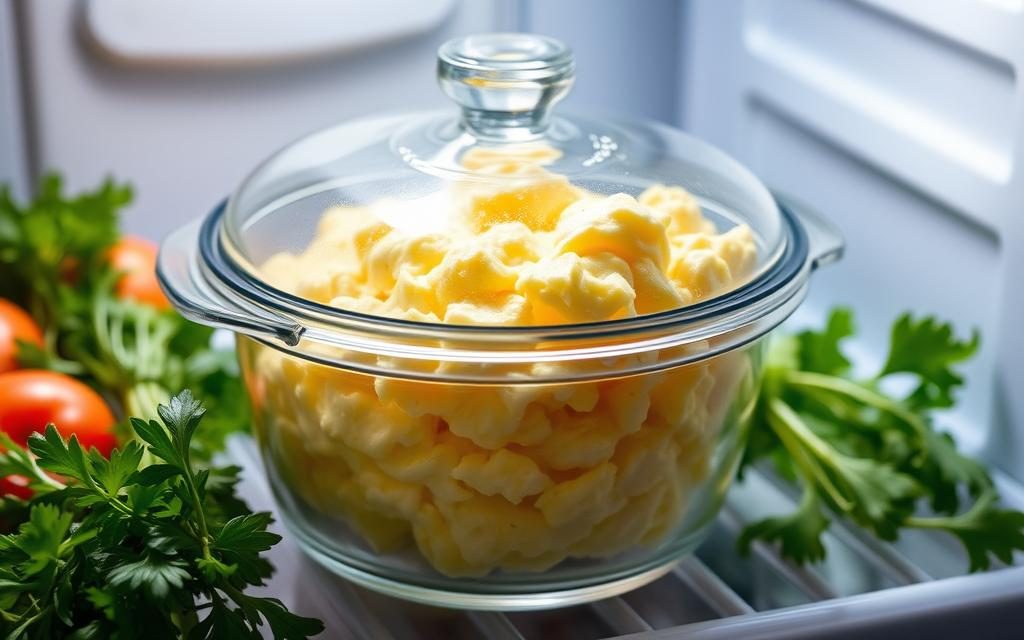
Leftover scrambled eggs need special care to stay good. The FDA has rules for keeping eggs safe and tasty.
Refrigeration Guidelines
Here’s how to store scrambled eggs:
- Cool eggs to room temperature within 2 hours of cooking
- Place in an airtight container
- Refrigerate immediately
- Consume within 3-4 days
Reheating Suggestions
Reheating eggs needs care to keep them creamy. Here are ways to reheat eggs:
| Reheating Method | Instructions | Temperature Check |
|---|---|---|
| Skillet Method | Low heat, add splash of milk | Stir frequently |
| Microwave Method | Short 15-second bursts | Stir between intervals |
Pro tip: Make sure reheated eggs are 165°F (74°C) to be safe. Don’t reheat eggs too many times. It makes them less tasty and riskier.
Frequently Asked Questions About Scrambled Eggs
Many people want to know how to make creamy scrambled eggs. They also ask about making them ahead of time. Learning about egg cooking can make breakfast special.
How Do You Achieve Creaminess?
To make creamy scrambled eggs, use the right method. Cook on low heat and stir a lot. This makes the eggs smooth.
Adding a bit of sour cream or butter makes them richer. Chefs say to use 1 ½ tablespoons of sour cream or heavy cream for three eggs. This makes them extra creamy.
Can You Make Ahead Eggs?
Yes, you can make eggs ahead of time. But fresh eggs are always best. You can cook eggs a bit and then finish them just before eating.
Keep cooked eggs in the fridge for up to four days. But reheating might change their texture a bit. To reheat well, gently warm them in a pan over low heat. Don’t overcook them.
Pro tip: Use a rubber spatula to fold eggs gently. Season with salt and black pepper for the best taste and look.


