
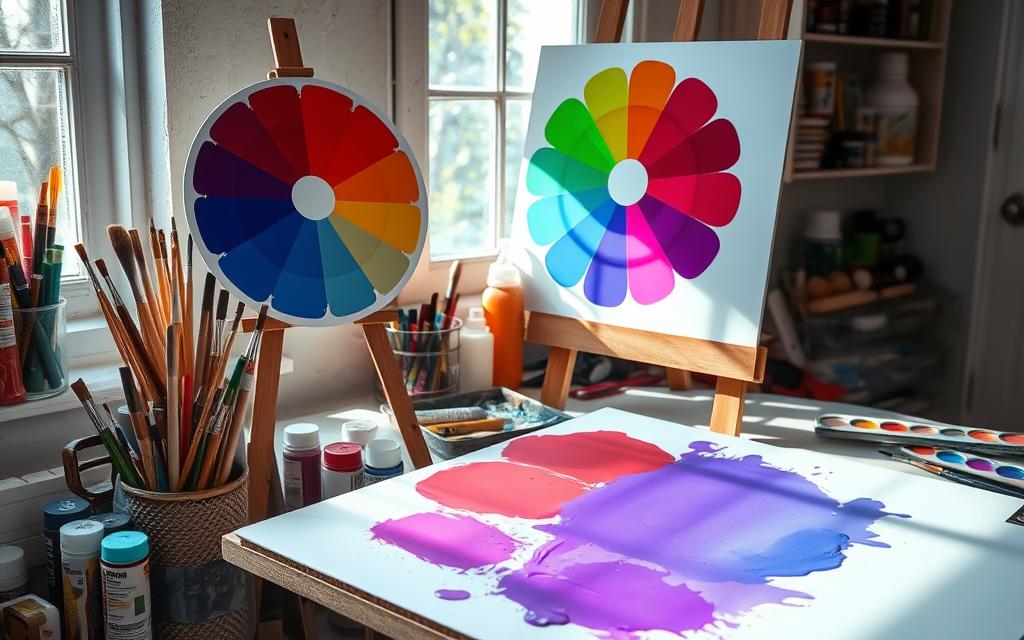
Ever wonder how artists and designers make perfect purple? It’s more interesting than you think!
Making purple is both a science and art. Mixing red and blue opens up creative possibilities. Purple has a rich history, from ancient nobility to modern design.
Color theory is key to making purple dye. Whether you paint, design, or love creativity, learning to make purple can change your art.
Key Takeaways
- Purple is created by mixing red and blue in specific proportions
- Natural and artificial methods can produce purple color
- Lighting and base colors significantly impact purple shades
- Different mixing techniques yield varied purple tones
- Purple has deep cultural and psychological significance
Understanding Color Theory
Color theory is all about how colors work together. Artists and designers use it to mix colors, like purple. They explore color relationships and mixing techniques.
The base of color theory is three colors: red, yellow, and blue. These colors help make all other colors, including purple. DIY purple color fans love to learn about this.
Primary and Secondary Color Dynamics
Color mixing opens up new creative paths. Let’s see how primary colors mix:
- Red + Blue = Purple
- Blue + Yellow = Green
- Red + Yellow = Orange
Secondary colors come from mixing primary colors. Purple is made by mixing red and blue.
The Intricate Role of Color Mixing
Color mixing is more than just mixing colors. The shades of pigments change the final color.
| Color Combination | Resulting Purple Shade | Characteristics |
|---|---|---|
| Cool Blue + Cool Red | Vibrant Purple | Bright, Intense |
| Warm Blue + Warm Red | Muted Purple | Subdued, Earthy |
| Purple + White | Lavender | Soft, Pastel |
| Purple + Black | Deep Plum | Rich, Dark |
Knowing color theory lets artists make unique purple shades. These shades can show emotions and feelings.
The Basics of Mixing Paints
Making the perfect purple is all about color mixing. Artists have mixed colors for ages to get beautiful purples. Each paint type, like acrylic or watercolor, lets you make different purples.
When mixing red and blue paint, some important rules apply. The pigments you pick can change the purple a lot.
Using Acrylic Paints
Acrylic paints are great for purple. Here’s how to get the best purple:
- Start with Ultramarine Blue or Cobalt Blue as your base
- Add Alizarin Crimson or Quinacridone Red to get the purple tone
- Mix colors slowly to control the shade
Pro tip: Acrylics dry darker than they look wet. Test your mix on a separate area to get the right purple.
Using Watercolors
Watercolors let you make purple in a light way. Try these tips:
- Use transparent blues like Ultramarine
- Layer cool reds to add depth
- Play with water and pigment ratios
Remember, each paint brand is a bit different. Always test and tweak your purple recipe to fit your vision.
Mixing Colors with Food Dye
Making homemade purple pigment is fun. It turns simple recipes into colorful works of art. Food coloring makes it easy to create purple in your cooking and baking.
Getting good at using food coloring takes skill and creativity. To make perfect purple, you need to know about color ratios and mixing techniques.
Choosing the Right Dyes
When picking food dyes for purple, keep these tips in mind:
- Choose liquid or gel food coloring for the best results
- Go for high-quality, concentrated dyes
- Pick colors that mix well together
Tips for Food Coloring
To make amazing purple shades, follow these expert tips:
- Begin with a 15:5 ratio of blue to red food coloring
- Add drops slowly to control the color’s strength
- Change the color’s warmth by adjusting the red or blue
- Use white coloring for lighter pastel purple
- Add a little black for deeper purple
Try different ratios to find special purple shades for your recipes or art. Making purple is both a science and an art. It takes patience and practice.
Creating Purple with Natural Ingredients
Nature has many ingredients for making purple dye. You can use vibrant berries and unexpected vegetables. These natural sources create stunning purple hues.

Trying natural purple dye methods is fun and educational. You can make beautiful purple colors with plants. This process is simple and doesn’t need much processing.
Fruits and Vegetable-Based Purple Dyes
- Blueberries: Rich in deep blue-purple pigments
- Purple sweet potatoes: Creates smooth, rich purple tones
- Red cabbage: Produces variable purple shades depending on pH
- Blackberries: Intense dark purple color
Herbal and Plant-Based Extraction Methods
Getting purple dye from nature needs the right methods. Boiling, straining, and concentrating plants can make vibrant purple colors. These colors are great for art projects.
A simple way to make purple dye is:
- Pick ripe, colorful fruits or veggies
- Crush or blend them
- Strain through a fine mesh cloth
- Heat the liquid gently to concentrate it
Tip: Adding a bit of food-grade alcohol can make your purple dye last longer. It also makes it better for different uses.
With these methods, artists and crafters can make purple colors in a green way. They use nature’s colors for their projects.
Color Mixing Techniques
Making the perfect purple is all about color mixing. Artists and designers use many ways to mix colors for purple. They try both old and new methods.
Art pros say mixing red and blue paint is more than just adding colors. They think about color temperature, pigment quality, and how to mix them.
Dry Mixing vs. Wet Mixing
There are two main ways to mix colors:
- Dry Mixing: Mixing dry pigments first
- Wet Mixing: Mixing colors on a palette or canvas
Dry mixing lets you control pigments well. Wet mixing makes colors blend smoothly.
Layering for Depth
Layering is a cool way to get deep purple colors. Artists use many transparent layers to make colors rich and complex.
| Mixing Technique | Primary Colors | Result |
|---|---|---|
| Dry Mixing | Red + Blue Powder Pigments | Matte Purple |
| Wet Mixing | Ultramarine Blue + Quinacridone Red | Vibrant Purple |
| Layering | Multiple Translucent Layers | Deep, Complex Purple |
Learning these mixing techniques helps artists make amazing purple colors. They can be very precise and creative.
The Impact of Light on Color
Making purple colors need knowing how light changes how we see them. Light and color mix in a cool way. This can really change how your purple projects look.
Lighting can change how we see purple a lot. Daylight shows colors best. But, artificial light can change things a bit.
Lighting Conditions and Color Dynamics
- North-facing rooms have soft light. This makes dark purples look deeper.
- South-facing rooms make colors brighter, including purple.
- West-facing rooms have warm light in the evening. This makes purple richer.
- East-facing rooms have cool light in the morning.
Understanding Light’s Color Influence
When making purple, think about these lighting tips:
- Bulb Color Temperature: Warm bulbs make purple look redder.
- Cool bulbs make purple look bluer.
- Daylight-balanced bulbs show purple most accurately.
Designers say to test purple under different lights. A color that looks great in daylight might not look the same at night.
Purple is a complex color. It has wavelengths from 380 to 450 nanometers. This means purple changes a lot with the right lighting.
The Psychology of Purple
Purple is a color that holds deep meaning. It affects how we feel and think. Making purple is more than just mixing colors.
This color has always been special. It has been loved for ages. Purple is full of mystery and power.
Emotional Associations
Purple touches our hearts in many ways:
- It shows our creativity and dreams.
- It means we are connected to something bigger.
- It makes us think deeply and feel curious.
- It feels fancy and special.
Purple in Branding and Design
Brands use purple to send messages:
| Industry | Purple Usage | Psychological Impact |
|---|---|---|
| Beauty | Luxury packaging | Sophistication |
| Technology | Logo design | Innovation |
| Wellness | Meditation spaces | Tranquility |
Purple can show many feelings. It’s a strong choice in design and talking to people.
Art Projects That Use Purple
Purple is a color that makes art come alive. It’s used in painting and crafting. It turns simple things into amazing art.

Art lovers have always been drawn to purple. Famous artists like Van Gogh and Monet used it in their work. Today, artists keep finding new ways to use purple in their art.
Painting Techniques with Purple
Here are some ways to use purple in painting:
- Blend different shades of purple to create depth and dimension
- Use lavender and violet tones for soft, ethereal effects
- Experiment with magenta and blue-purple combinations
- Layer purple hues to achieve complex visual textures
Crafts and DIY Purple Projects
Purple is great for crafting and DIY projects. Here are some ideas:
- Fabric dyeing using natural purple pigments
- Paper crafts with gradient purple backgrounds
- Home decor items featuring purple color schemes
- Jewelry making with purple-tinted materials
Working with purple is fun because it’s so versatile. It’s good for both artists and hobbyists. Each purple shade has its own story, from deep to light.
Pro tip: Always experiment and trust your artistic instincts when crafting purple hues!
Troubleshooting Common Mixing Mistakes
Making the perfect purple needs careful mixing of red and blue paint. Artists and color lovers often face problems that mess up their mixing.
When trying to mix colors for purple, some big mistakes can stop your creativity. Knowing these mistakes helps artists get the right colors.
Identifying Over-Saturation Problems
Too much color can make purple look muddy or wrong. To avoid this, try these tips:
- Start with small amounts of pigment
- Mix colors slowly
- Test color mixes on scrap paper
- Use a color wheel for help
Balancing Purple Shades
Getting the right purple shade is all about color control. When mixing red and blue, remember these tips:
- Choose good pigments with little undertones
- Stay away from reds with yellow or green undertones
- Neutralize purple by adding a bit of yellow
- Remember, acrylic paints dry darker
Pro tip: Always test your color mix in small amounts before a big project.
Tips for Storing Mixed Colors
Making your own purple dye needs careful storage. This keeps your purple dye fresh and ready for art.
- Choose airtight containers to prevent contamination
- Label containers with creation date and color mixture
- Store in cool, dark environments
- Use glass or high-quality plastic containers
Long-Term Storage Solutions
Every purple dye recipe needs its own storage plan. Natural pigments don’t last as long as synthetic ones. Water-based purple dyes can last about two weeks in the fridge.
Using Jars and Containers
Choosing the right container is key. Glass jars with tight lids are best for keeping colors bright.
| Pigment Type | Storage Method | Expected Shelf Life |
|---|---|---|
| Natural Purple Dye | Refrigerate in sealed container | 2 weeks |
| Alcohol-Based Pigment | Cool, dark place | 3-6 months |
| Acrylic-Based Purple | Airtight container | 1-2 years |
Freezing natural dyes in ice cube trays is a great tip. Then, move them to freezer bags. This keeps your purple dye fresh and stops waste.
The Myth of Purple Paints
Purple has a long and interesting history. It’s not just about mixing colors. It’s a story of art and culture that excites many today.
Creating purple dye was once a big challenge. Only the rich could have purple, seen as a sign of power. The Phoenicians worked hard to get purple from sea creatures.
Historical Color Mysteries
The story of purple pigments is full of creativity and innovation. Before new technologies, making purple was hard for artists.
- Ancient purple dyes were very expensive
- Only the rich could wear purple clothes
- Getting natural pigments was a complex task
Modern Purple Trends
Now, making purple is much easier thanks to new technologies. Artists and designers can make many purple shades with ease.
| Era | Purple Production Method | Accessibility |
|---|---|---|
| Ancient Times | Rare Natural Extraction | Extremely Limited |
| 19th Century | Early Synthetic Processes | Moderately Available |
| Modern Day | Advanced Synthetic Technologies | Widely Accessible |
Today, artists can make many purple shades. From deep royal colors to bright neon ones. This new freedom in color-making opens up endless possibilities for all.
Exploring Shades of Purple
Crafting purple hues is an exciting journey. It takes you through a spectrum of mesmerizing colors. DIY purple color exploration shows a rich palette of variations. These can transform any artistic project.

The world of purple is complex. Artists and designers know each shade tells a unique story. They convey different emotions and visual experiences.
Lavender: The Delicate Purple
Lavender is a gentle approach to DIY purple color mixing. This light purple shade has:
- Soft blue undertones
- Subtle pastel qualities
- Calm and soothing appearance
Violet: Intense and Vibrant
Violet is different from lavender. It offers a more intense crafting purple hues experience. This deeper purple variation has:
- Rich, saturated color
- Strong blue-red undertones
- Dramatic visual impact
Deep Purple Variations
Exploring deeper purple shades reveals fascinating color nuances. Artists can create remarkable depth by experimenting with:
- Indigo: A blue-purple blend
- Plum: A red-purple combination
- Royal purple: A rich, intense hue
Color mixing techniques allow painters and designers to manipulate purple’s character. Adjusting red and blue ratios changes its look. Adding white makes it lighter. Incorporating black makes it deeper and more mysterious.
Practical Applications of Purple
Purple is a color that makes spaces and styles special. It’s used in home decor and fashion. People learn to make purple and try out purple dye recipes.
Elevating Home Decor with Purple
Designers use purple to make rooms look fancy. Purple helps people think creatively and solve problems. Different shades change how a room feels:
- Lavender for calming bedroom environments
- Deep royal purple for elegant living rooms
- Soft lilac for peaceful home offices
Fashion and Accessory Innovations
Purple is great in fashion. It can be used for simple or bold items. This color shows off style and creativity.
| Purple Shade | Fashion Application | Emotional Impact |
|---|---|---|
| Lavender | Delicate accessories | Soft, romantic |
| Deep Violet | Evening wear | Luxurious, powerful |
| Plum | Professional attire | Sophisticated, creative |
Artists and designers can try purple dye recipes. They make special fabrics, tie-dye, and unique clothes. These items are different from usual colors.
Tools and Supplies Needed
Making purple is more than just being creative. You need special tools to mix red and blue paint. The right tools help you mix colors better and make your art look great.
Before you start making purple, get the best mixing supplies. They help you get the colors right.
Essential Mixing Tools
- Professional palette knives for smooth pigment blending
- Ceramic or glass mixing palettes
- Precision measuring droppers
- Artist-grade brushes with soft bristles
- Color mixing charts for reference
Quality Supplies and Purchasing Recommendations
Choosing the best supplies is key for bright purple colors. Look for top art stores and online shops for great mixing tools.
| Supply Type | Recommended Brands | Price Range |
|---|---|---|
| Acrylic Paints | Golden, Liquitex | $10-$25 |
| Mixing Palettes | Arteza, Bob Ross | $5-$15 |
| Palette Knives | Mont Marte, Princeton | $8-$20 |
Pro tip: Invest in artist-grade supplies for consistent and high-quality purple pigments.
Experimenting With Purple in Digital Art
Digital art lets us play with purple in cool ways. Graphic designers and artists use special software to make unique purple shades. They do this with both precision and creativity.
Today’s digital art tools make playing with purple easy. Artists can change colors to make many purple shades.
Color Selection in Software
Creating purple digitally means knowing RGB values. Artists use numbers to mix purple:
- Classic violet: R: 138, G: 43, B: 226
- Soft pink-violet: R: 186, G: 85, B: 211
- Deep rich violet: R: 72, G: 61, B: 139
Using Color Palettes
Color palettes help artists make purple designs that go together. These tools let artists change purple colors in their work.
| Software Feature | Purple Color Functionality |
|---|---|
| Color Wheel | Visualize complementary purple shades |
| Saturation Slider | Adjust purple color intensity |
| Opacity Controls | Create transparent purple effects |
With these tools, artists can make endless purple colors. They turn their ideas into amazing pictures.
Conclusion and Final Thoughts
Learning to make purple is a fun journey. It mixes creativity with skill. Artists and designers can try many ways to mix colors.
Whether you use watercolors, acrylics, or digital tools, making purple takes patience. You need to try different things.
Encouragement to Experiment
Making vibrant purple shades is all about being open. Don’t be afraid to try new things. Every mistake is a chance to learn.
When you try watercolor purple techniques, keep practicing. This will make you better at mixing colors.
Resources for Further Learning
Art supply stores, online tutorials, and color theory workshops can help you. They teach you how to make purple better.
Artists should learn about color relationships and how light affects colors. This knowledge is key to mastering purple.
Your journey with purple is special. Be brave, try new things, and make a color palette that shows your art. Mixing colors is both a science and an art. It’s for those who are curious and keep trying.


