
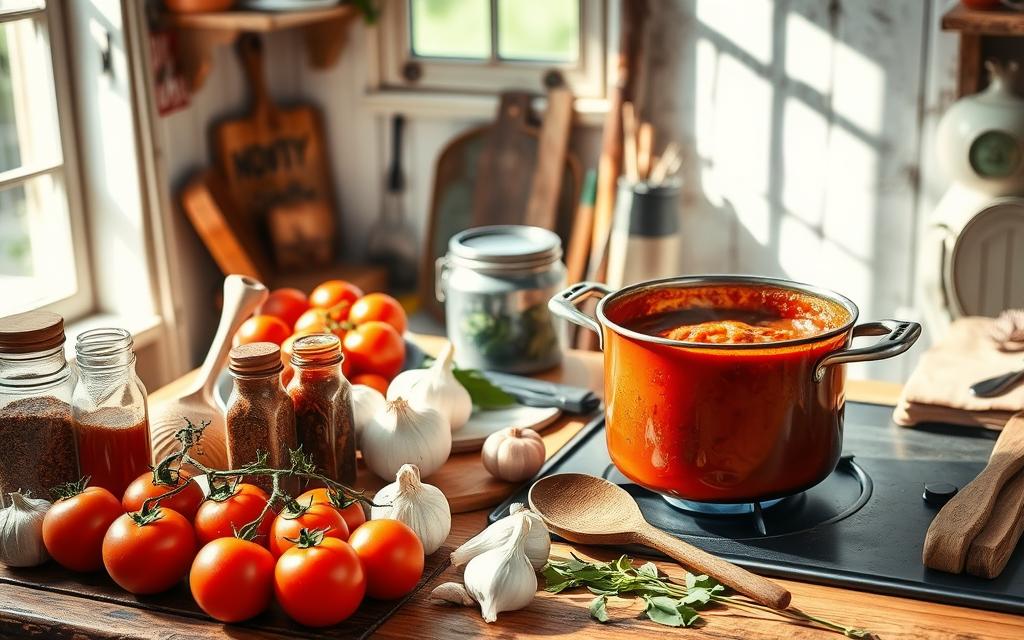
Ever wondered why store-bought ketchup doesn’t taste as fresh as homemade? You can make your own ketchup. It will make your food taste better.
Making your own ketchup is fun. It’s a way to eat healthier and taste better. You only need a few ingredients to make it.
This guide will show you how to make ketchup that’s tasty and healthy. You can make it your own way. You’ll learn to make the perfect ketchup at home.
Key Takeaways
- Homemade ketchup offers superior flavor and nutrition
- Easy to customize with various spices and sweeteners
- Contains fewer preservatives than store-bought versions
- Can be stored refrigerated for up to one month
- Yields approximately 32 servings per batch
The History of Ketchup: A Brief Overview
Ketchup’s journey is amazing. It started in Asia and changed over time. Now, it’s a tomato sauce we all love.
Ancient Origins of Ketchup
Ketchup started in Southeast Asia over 2,000 years ago. It was a fish sauce called kê-tsiap in Hokkien Chinese. This sauce was very different from today’s ketchup.
- 3rd century BC: First recorded sauce in China
- Southeast Asian origin as fermented fish sauce
- Linguistic roots in Hokkien Chinese word “kê-tsiap”
Evolution Through Centuries
In the 19th century, tomatoes became the main ingredient. The H. J. Heinz Company helped make ketchup popular.
| Era | Ketchup Characteristics |
|---|---|
| 3rd Century BC | Fermented Fish Sauce |
| Early 19th Century | Tomato-Based Medicinal Tonic |
| Late 19th Century | Commercial Tomato Ketchup |
Modern-Day Variants
Today, ketchup is loved all over the world. People eat almost 2 kilos of it every year. Now, there are craft and artisanal ketchups that are exciting.
- Estimated $37 billion in ketchup sales by 2024
- 15 million tonnes projected global production
- Americans consume over 11 pounds per person annually
Essential Ingredients for Homemade Ketchup
To make perfect homemade ketchup, you need to know the key ingredients. These ingredients turn simple parts into a tasty condiment. Choosing the right tomatoes and spices is very important.
Tomatoes: Choosing the Right Type
Choosing the right tomatoes is key for great ketchup. Roma tomatoes are the best for home cooks. They have a rich flavor and not much water.
Italian tomato paste is also a good choice. It’s easy to use and adds a lot of flavor to your ketchup.
- Roma tomatoes: Best for fresh ketchup
- Italian tomato paste: Convenient option
- Concentrated flavor profile
- Low moisture content
Sugar vs. Alternative Sweeteners
Trying different sweeteners can make ketchup taste amazing. Brown sugar is common, but you can also use honey or maple syrup. The goal is to find the right balance of sweet and tangy.
| Sweetener | Flavor Profile | Sweetness Level |
|---|---|---|
| Brown Sugar | Rich, Molasses-like | Medium |
| Honey | Floral, Smooth | High |
| Maple Syrup | Woody, Complex | Medium-High |
Spice and Seasoning Choices
Spices make ketchup special. Classic recipes use onion powder, garlic powder, and salt. You can also try smoked paprika, cayenne pepper, or celery salt for something different.
- Onion powder: Classic base flavor
- Garlic powder: Adds depth
- Smoked paprika: Introduces complexity
- Cayenne pepper: Brings heat
Homemade ketchup is all about trying new things. Don’t be afraid to mix and match ingredients to make your own unique sauce.
Basic Homemade Ketchup Recipe
Making your own ketchup is simple. This recipe lets you make a tasty condiment that’s better than store-bought. It’s also healthier.
Homemade ketchup lets you choose what goes into it. It might seem hard, but it’s easy once you know how. You’ll make delicious ketchup quickly.
Essential Ingredients for Your Ketchup Recipe
- 15 lbs fresh or frozen tomatoes
- 1 3/4 cup chopped yellow onion
- 1 cup sugar
- 1 3/4 cup white vinegar
- Spices: garlic powder, sea salt, black pepper, cayenne
Step-by-Step Preparation
- Core and prepare tomatoes
- Chop onions finely
- Combine ingredients in a large stockpot
- Simmer for 2-3 hours, reducing liquid by half
- Blend until smooth
- Strain for desired consistency
Common Mistakes to Avoid
Watch out for these mistakes when making ketchup:
- Overcooking: Can make it taste burnt
- Under-seasoning: Taste and add spices slowly
- Incorrect consistency: Simmer longer to thicken
Your homemade ketchup makes about 16 servings. Each 2-tablespoon serving has 56 calories. Keep it in a glass jar in the fridge for 2 weeks or freeze for 2 months.
Exploring Gourmet Ketchup Variations
Ketchup lovers rejoice! There’s more to ketchup than the usual red sauce. Home cooks can try new flavors that make any meal better.
Creating your own ketchup lets you get creative. You can choose bold or subtle flavors. There’s a gourmet ketchup for everyone.
Spicy Ketchup: Adding Heat
Spicy ketchup adds excitement to your food. Try these spicy options:
- Cayenne pepper-infused ketchup
- Sriracha-blended ketchup
- Jalapeño-enhanced ketchup
Fruit-Infused Ketchup for Unique Flavors
Fruit ketchup adds sweet and tangy flavors. Try these tasty mixes:
- Mango ketchup with a tropical twist
- Raspberry-infused ketchup
- Pineapple ketchup for a summery kick
Herb-Infused Ketchup Recipes
Herb ketchup brings sophisticated tastes. Try these aromatic flavors:
- Basil-infused ketchup
- Oregano and thyme blend
- Rosemary-enhanced ketchup
Each flavor needs about 3 pounds of tomatoes for 1 cup of ketchup. You can adjust the recipe to your liking.
| Ketchup Variation | Key Ingredients | Flavor Profile |
|---|---|---|
| Spicy Ketchup | Cayenne, Hot Sauce | Intense Heat |
| Fruit Ketchup | Mango, Berries | Sweet & Tangy |
| Herb Ketchup | Fresh Herbs | Aromatic & Fresh |
Keep your homemade ketchup in the fridge for up to 2 weeks. This keeps it fresh and flavorful.
How to Make Ketchup Without Tomatoes
Looking into tomato-free ketchup opens up a world of tasty and creative dishes. It’s great for those with tomato allergies or who want new flavors. Making your own ketchup can be fun and healthy.
Fruit-Based Ketchup Innovations
Fruit ketchup adds a fun twist to usual condiments. Here are some tasty options:
- Apple-based ketchup with warm spices
- Plum ketchup with a tangy taste
- Banana ketchup, loved in the Philippines
Vegetable Ketchup Alternatives
Vegetable ketchup makes regular condiments healthier. Great veggies for tomato-free ketchup are:
- Roasted beets with rich, earthy flavors
- Sweet carrots mixed with spices
- Grilled bell peppers for smoky taste
When making vegetable ketchup, aim for the right mix of texture and taste. Try different spices to make a special sauce that’s as good as tomato ketchup.
Pro tip: Most tomato-free ketchups can stay fresh in the fridge for 2 weeks. Some can even be frozen for 3-6 months.
Nutritional Benefits of Homemade Ketchup
Making your own ketchup at home is super good for you. You can pick what goes into it. This way, you can make a ketchup that’s tasty and healthy.
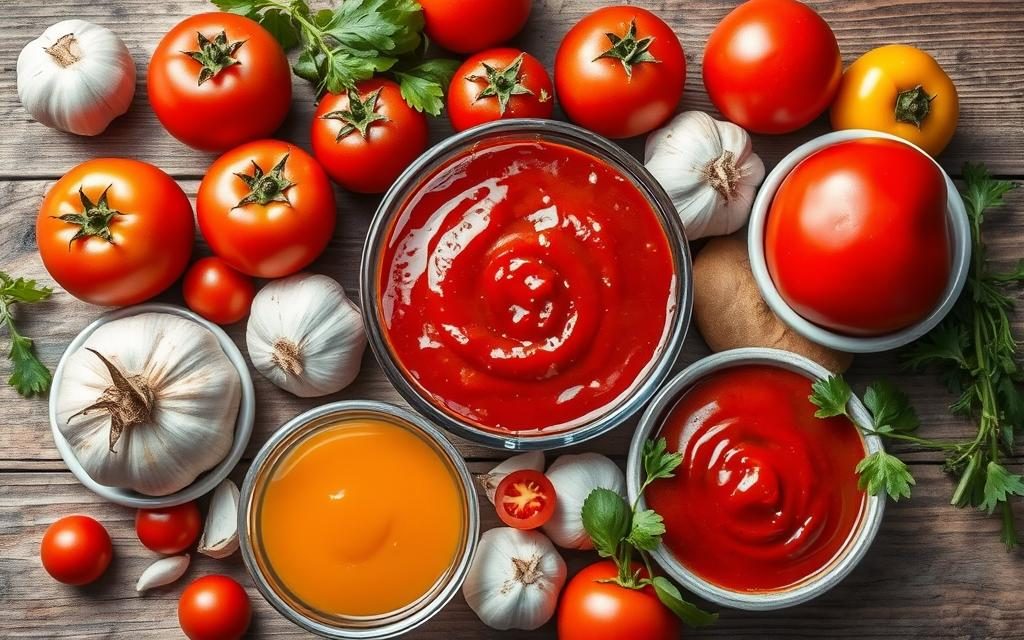
When you make ketchup yourself, you get lots of health perks. It becomes a better choice than store-bought ketchup. Here are the main benefits:
Lower Sugar Content
Store-bought ketchups have too much sugar. This can be bad for your health. But, making your own ketchup lets you cut down on sugar:
- One tablespoon of homemade ketchup has only 2g of sugar
- You can use natural sweeteners like dates or maple syrup
- You can control how much sugar goes in
Fresh Ingredients Matter
Using fresh, whole ingredients makes a big difference. Homemade ketchup gives you:
| Nutrient | Amount per Tablespoon |
|---|---|
| Calories | 11 |
| Protein | 0.3g |
| Fiber | 0.3g |
| Lycopene | High Concentration |
Customizing Nutritional Profiles
The best thing about homemade ketchup is you can change it up. You can make it fit your diet:
- Add blackstrap molasses for extra minerals
- Use apple cider vinegar for better digestion
- Put in ground cloves for more flavor
Pro tip: Homemade ketchup can last up to 3 weeks in the fridge. This means you can enjoy its health benefits for a long time!
Storing Your Homemade Ketchup
Making homemade ketchup is fun. But, it’s important to store it right to keep it fresh. Knowing how to store ketchup helps keep it tasty longer.
Best Practices for Refrigeration
Choosing the right container is key for storing homemade ketchup. Here are some tips:
- Use glass mason jars with tight-fitting lids
- Select clean, sterilized airtight containers
- Leave a small space at the top to allow for expansion
- Cool the ketchup completely before refrigerating
How Long Can Ketchup Last?
The shelf life of homemade ketchup varies. It usually stays fresh for 2-3 weeks in the fridge. For longer storage, try these options:
- Refrigerator Storage: 2-3 weeks in an airtight container
- Freezer Storage: Up to 6 months in freezer-safe containers
Pro tip: Always check for signs of spoilage before eating. If it looks, smells, or tastes off, throw it away.
| Storage Method | Duration | Best Practices |
|---|---|---|
| Refrigerator | 2-3 weeks | Use airtight glass container |
| Freezer | Up to 6 months | Use freezer-safe containers |
By following these tips, you can enjoy your homemade ketchup for weeks.
Ketchup Pairings: What Goes Best?
Ketchup is more than just a condiment. It makes simple dishes taste amazing. There are many ketchup pairings to try, each one a surprise.
There are many tasty ketchup combinations. They go beyond burgers and fries. Homemade ketchup can make many dishes taste better, from savory to sweet.
Classic Food Pairings
Here are some traditional foods that go well with ketchup:
- Hamburgers
- French fries
- Hot dogs
- Meatloaf
- Scrambled eggs
Unconventional Ketchup Combinations
Chefs and food lovers are trying new ketchup pairings. They’re making dishes that are both surprising and tasty:
- Blueberries and ketchup
- Corn with tangy ketchup
- Green beans drizzled with ketchup
- Egg rolls dipped in ketchup
- Plantain chips with ketchup
People are trying new ketchup combinations. They’re making dishes that are full of flavor and fun to eat.
Creative Ketchup Pairing Strategies
| Dish Category | Ketchup Pairing Suggestion |
|---|---|
| Vegetables | Roasted vegetables with ketchup glaze |
| Snacks | Fry sauce (ketchup + mayonnaise) |
| Marinades | Grilled meat marinades with ketchup base |
Homemade ketchup is very flexible. Try different ingredients and find your own ketchup combinations!
Troubleshooting Common Ketchup Issues
Making perfect homemade ketchup can be tough. Ketchup’s consistency is a big worry for many cooks. Knowing how to fix common problems can lead to a tasty result.
Solving Thickness Problems
Fixing ketchup’s texture needs careful steps. If your ketchup is too thick, try these fixes:
- Add small amounts of water gradually
- Incorporate a splash of vinegar
- Warm the mixture to soften consistency
If your ketchup is too thin, cook it longer. This will reduce the liquid and make the flavors stronger. Patience is key in achieving the perfect texture.
Addressing Flavor Challenges
Off-flavors can mess up your ketchup-making. To balance taste, adjust ingredients carefully:
| Flavor Issue | Solution |
|---|---|
| Too Sweet | Add more vinegar or lemon juice |
| Too Acidic | Incorporate a bit more sugar |
| Bland Taste | Enhance with additional spices |
Ketchup troubleshooting is an art of small changes. Let your mixture chill in the fridge. This lets flavors mix well before you make final changes. Remember, making homemade ketchup is all about trying different things until you get it right.
Creative Uses for Ketchup Beyond Dipping
Ketchup is more than just a dip. It’s a secret ingredient for creative cooking. Home chefs are finding new ways to use it in their dishes.

Discovering new uses for ketchup opens up a world of tasty possibilities. It can be used in marinades and sauces, showing its surprising versatility.
Cooking Sauces and Marinades
Turn ketchup into something amazing with these ideas:
- Make a quick homemade BBQ sauce by mixing ketchup with brown sugar, vinegar, Worcestershire sauce, and smoked paprika
- Make a tangy meat marinade with ketchup, soy sauce, garlic, ginger, and honey
- Use it as a tasty glaze for meatloaf, making it caramelized during cooking
Ketchup in Salad Dressings
Ketchup can change the game in salad dressings and sauces. Creative cooks are finding new ways to use it in their recipes.
| Sauce Type | Preparation Time | Key Ingredients |
|---|---|---|
| BBQ Sauce | 15 minutes | Ketchup, brown sugar, vinegar |
| Pasta Sauce | 25 minutes | Ketchup, garlic, herbs, red wine |
| Cocktail Sauce | 5 minutes | Ketchup, horseradish, lemon juice |
Looking to spice up a pizza sauce or make a unique dressing? Ketchup is your key to creativity. Try mixing it with other ingredients to find your own special sauce!
Preserving Ketchup for Long-Term Use
Homemade ketchup is a tasty choice instead of store-bought. But, you need to know how to keep it fresh for months. You must pay attention to how you store it and keep it safe to eat.
There are two main ways to keep your homemade ketchup good: canning and freezing. Each method has its own benefits for keeping your ketchup tasty and fresh.
Canning Ketchup: A Step-by-Step Guide
Canning ketchup needs careful steps. Here’s what to do:
- Use clean, sterilized glass jars
- Prepare a boiling water bath
- Make sure all ingredients are fresh and of good quality
- Process jars for exactly 15 minutes
When you can ketchup, you can make about 4 half-liter jars from one batch. It takes about 3 hours and you’ll need about 13 pounds of tomatoes.
Freezing Ketchup: A Simple Preservation Method
Freezing ketchup is easy compared to canning. Just use containers that are safe for the freezer. Make sure there’s room for the ketchup to expand. Frozen ketchup stays good for up to six months if stored right.
| Preservation Method | Storage Duration | Preparation Time |
|---|---|---|
| Canning | Up to 1 year | 3 hours |
| Freezing | Up to 6 months | 30 minutes |
Choose the method you like best. Always write the date you made it on the container. Remember, opened homemade ketchup should be eaten in 4-6 weeks for the best taste and safety.
The Impact of Craft Ketchup Brands
The ketchup market has changed a lot with craft ketchup brands. These brands offer unique flavors and quality ingredients. They are different from the usual mass-produced ketchups.

More people want better condiments. Craft ketchup brands have grown by 8% each year. This shows a big change in what people want to eat.
Overview of Popular Craft Ketchup Brands
Some craft ketchup brands stand out:
- Sir Kensington’s – Known for innovative flavor combinations
- Portland Ketchup Company – Emphasizing local, organic ingredients
- Heinz Organic – Bridging traditional and craft ketchup markets
Taste Testing: How They Compare
| Brand | Price per Ounce | Key Characteristics |
|---|---|---|
| Trader Joe’s Organic | 9¢ | Best value, organic ingredients |
| Heinz Organic | 25¢ | Premium flavor, trusted brand |
| Annie’s Organic | 22¢ | Natural ingredients, health-focused |
Craft ketchup brands focus on quality. They use non-GMO ingredients and organic tomatoes. They also have more complex flavors.
More people want to eat better. 60% of them look for natural ingredients and fewer artificial additives in their food.
Sustainability in Homemade Ketchup
Making ketchup at home is fun and good for the planet. It’s about using local ingredients and smart cooking. This way, making ketchup becomes a green choice.
Using Local Ingredients for Eco-Friendly Ketchup
Start with fresh, local ingredients for sustainable ketchup. Visit farmers’ markets for tomatoes and veggies. This helps local farmers and cuts down on emissions.
- Purchase tomatoes from local farms
- Select organic herbs from community gardens
- Use seasonal vegetables for maximum freshness
Reducing Waste in Ketchup Preparation
Make ketchup eco-friendly by reducing waste. Use all parts of veggies, compost leftovers, and reuse glass jars. These actions help the planet.
| Waste Reduction Strategy | Environmental Impact |
|---|---|
| Composting vegetable scraps | Reduces landfill waste |
| Reusing glass containers | Minimizes plastic consumption |
| Using whole ingredients | Decreases food waste |
By using these green tips, making ketchup becomes good for you and the Earth.
Conclusion: Why Make Your Own Ketchup?
Making your own ketchup is a fun adventure in cooking. It lets you make a simple sauce into something special. Americans eat a lot of ketchup, about 71 million pounds a year. But, making it yourself means you can choose what’s in it and how it tastes.
Homemade ketchup has many benefits. You can make it less sweet, without preservatives, and with your own flavors. You can keep it in the fridge for weeks. This makes it a fresh choice compared to store-bought ketchups like Heinz, which started in 1876.
Healthier Choice
When you make your own ketchup, you know what’s in it. You can pick the best tomatoes and control the salt. This makes ketchup a healthy part of your meals, fitting your diet and health goals.
Personal Taste Preferences
The best thing about homemade ketchup is you can make it your own. You can try spicy or herb flavors. Making your own ketchup lets you add flavor to marinades, dressings, or just enjoy a better taste.


