
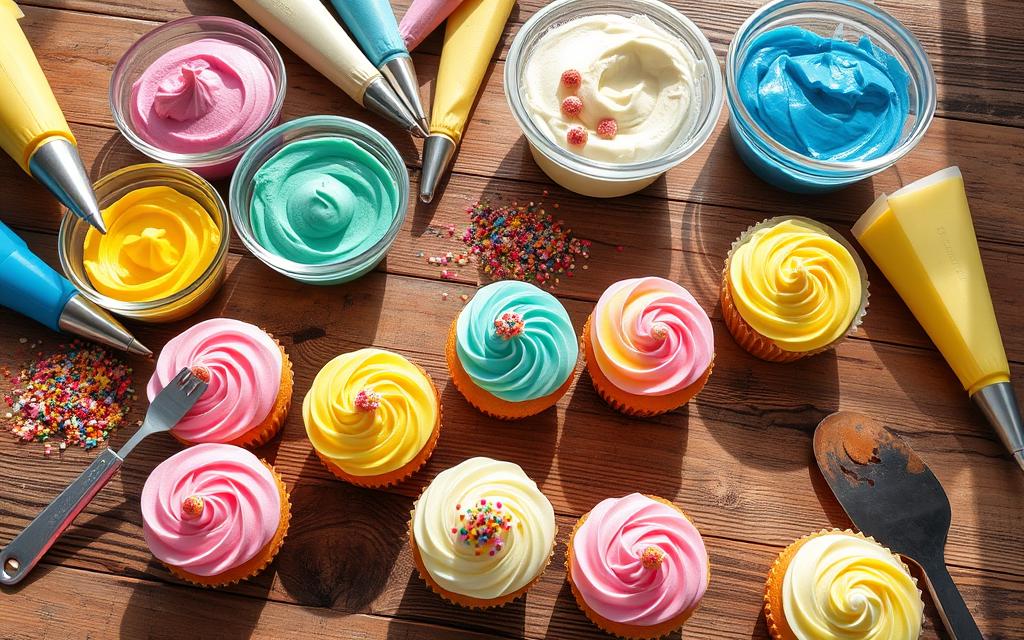
Ever wondered why homemade frosting tastes so much better? It’s because of fresh ingredients and your personal touch. This guide will show you how to make nine easy frosting recipes. They will make your desserts amazing.
Learning to make frosting is like an art. It lets you make your desserts special. Whether you’re new or experienced, these tips will help you make tasty toppings for cakes and more.
This frosting guide has it all. From classic buttercream to new flavors. You’ll learn how to make frostings that are smooth and delicious. They will wow your family and friends.
Key Takeaways
- Homemade frosting offers superior taste and freshness
- Learn nine versatile frosting recipes for different desserts
- Understand essential ingredients and techniques
- Customize flavors with simple ingredient adjustments
- Master professional frosting decorating skills
What is Frosting?
Frosting makes ordinary baked goods into special treats. It’s a sweet, creamy mix that adds flavor and beauty. Knowing about frosting helps make desserts that look and taste great.
Frosting does more than just decorate. It makes baked goods moist, sweet, and creamy. Both pros and home cooks love how frosting can change a simple dessert into something special.
Types of Frosting
There are many kinds of frosting:
- Buttercream frosting: The most common, known for its creamy texture
- Cream cheese frosting: Tangy and smooth, great for carrot cakes
- Swiss meringue buttercream: Light and airy
- Italian meringue buttercream: Stays stable in warm weather
Frosting Varieties Explored
Each frosting type has its own special qualities. Buttercream is the most loved, with French buttercream being very rich. German buttercream tastes like ice cream.
Knowing about these frostings helps bakers pick the best one for their desserts. This ensures they look and taste amazing.
Essential Ingredients for Frosting
Making the perfect frosting starts with the right ingredients. Whether you bake at home or are a pro, the right ingredients make a big difference. They can turn your desserts from good to amazing.
To make tasty frosting, pick ingredients that mix well. They should be smooth and creamy, with a great taste. Let’s look at what makes frosting so special.
Common Ingredients for Frosting
- Unsalted butter (at room temperature)
- Confectioners’ sugar (sifted)
- Pure vanilla extract
- 2% milk or heavy cream
- Kosher salt (a pinch)
Experts say to use room-temperature ingredients for the smoothest frosting. Mix these ingredients well. This makes a light, fluffy frosting that’s easy to spread.
Specialty Frosting Ingredients
- European-style butter with higher fat content
- Cream cheese for tangy variations
- Fruit purees for natural flavoring
- High-quality chocolate
- Flavored extracts (almond, mint, etc.)
Want to make your frosting extra special? Try using unique ingredients. Adding fruit purees or premium chocolate can make your frosting unforgettable.
Pro tip: Sift your confectioners’ sugar and use soft butter. This makes your frosting smooth and perfect for cakes and cupcakes.
Tools You Need for Frosting
Creating delicious frosting needs the right tools for smooth results. Both pros and home cooks know good tools matter a lot.
Getting ready to make perfect frosting means picking the best tools. Let’s look at the key tools for tasty dessert toppings.
Essential Mixing Bowls
Choosing the right mixing bowls is key for frosting. Look for these features:
- Stainless steel bowls for lasting use
- Glass bowls for keeping the right temperature
- Various sizes from medium to large
- Non-slip bases for safe mixing
Electric Mixer for Frosting
An electric mixer makes frosting smooth and creamy. Bakers suggest two main types:
- Stand mixers with many attachments
- Hand-held mixers for small batches
When picking a mixer, think about power, speed, and whisk attachments. Mix for 7-8 minutes on high to get the right texture.
Spatulas and Piping Bags
Piping bags are key for fancy cake designs. Use them with various tips for cool designs.
- Rubber spatulas for bowl scraping
- Offset spatulas for easy spreading
- Disposable and reusable piping bags
- Different piping tips for cool designs
Invest in top-notch frosting tools to improve your baking. Make desserts look pro every time.
Classic Buttercream Frosting Recipe
Making the perfect buttercream frosting is like a fun art project. It makes your cakes, cupcakes, and desserts taste amazing.

It’s easy to learn how to make buttercream frosting. Just know the right ingredients and how to mix them. This makes the frosting smooth and creamy.
Ingredients Needed
- 2 1/2 cups unsalted butter (room temperature)
- 2 pounds powdered sugar
- 1/2 teaspoon salt
- 1/2 tablespoon vanilla extract
- 3 tablespoons heavy cream or milk
Step-by-Step Instructions
- Make sure all ingredients are at room temperature (60-70°F) for the best mix.
- Cream the butter until it’s smooth and fluffy, about 3-4 minutes.
- Slowly add powdered sugar, mixing on low speed to avoid sugar clouds.
- Add salt and vanilla extract, mixing until they’re fully mixed in.
- Slowly add cream, 1 tablespoon at a time, until the frosting is right.
Pro tip for hot weather: Use half butter and half Crisco for better frosting. This recipe makes about 6 cups of frosting, great for an 8-inch cake.
This buttercream frosting recipe is super flexible. You can change it up with different extracts or flavors like chocolate or coconut. Don’t worry if it looks bad at first – keep whipping until it’s smooth!
Cream Cheese Frosting Recipe
Cream cheese frosting is a superstar in desserts. It turns simple cakes into amazing treats, like carrot cake or red velvet.
Making the best frosting for carrot cake needs care and special ingredients. Here are the top tips for making cream cheese frosting.
Essential Ingredients for Cream Cheese Frosting
- 8 ounces full-fat brick cream cheese
- 1/2 cup unsalted butter
- 3 cups confectioners’ sugar
- 1 teaspoon pure vanilla extract
- 1/8 teaspoon salt
Preparation Techniques
Temperature is key when making cream cheese frosting. Make sure all ingredients are room temperature. Use a mixer for a smooth frosting.
Cream Cheese Frosting Tips and Storage
- Beat cream cheese and butter until smooth
- Add powdered sugar slowly to avoid lumps
- Include vanilla and salt for better taste
- Refrigerate for up to 5 days
- Freeze for up to 3 months
Pro tip: Always re-whip frosting after thawing. Add milk if it’s too thick.
This frosting recipe makes about 3 cups. It’s great for an 8-inch cake or 12 cupcakes. Its taste is perfect for many desserts.
Whipped Cream Frosting Recipe
Discover the magic of whipped cream frosting. It makes any dessert feel like a cloud. This frosting adds elegance and simplicity to your baking.
For perfect whipped cream frosting, use cold ingredients. This is key for the right texture and volume.
Essential Ingredients for Whipped Cream Frosting
- 2 cups heavy whipping cream
- 1/2 cup powdered sugar
- 1 teaspoon vanilla extract
- 4 oz cream cheese (room temperature)
Nutrition Profile
| Nutrient | Amount |
|---|---|
| Calories | 362 kcal |
| Carbohydrates | 18g |
| Protein | 3g |
| Fat | 32g |
Tips for Perfect Stabilization
To make a stable whipped cream frosting, follow these steps. Make sure your heavy whipping cream is ice-cold. Use room temperature cream cheese for a smooth texture.
- Chill mixing bowl and whisk
- Whip cream until soft peaks form
- Gradually add powdered sugar
- Incorporate room temperature cream cheese
- Whip until stiff peaks develop
This frosting recipe is great for trying new things. Try different extract flavors like almond, coconut, or lemon. This way, you can make your frosting unique.
Storage Recommendations
Keep your frosting in an airtight container in the fridge. Use it within 24-48 hours for the best taste and texture.
Chocolate Frosting Variations
Bakers have two great options for chocolate frosting. Chocolate buttercream and ganache-style frosting are both delicious. They add rich flavors and textures that chocolate fans adore.
To make perfect chocolate buttercream, pay attention to ingredients and how you mix them. Here’s what you need for a tasty batch:
- 3 sticks of unsalted butter (room temperature)
- 8 cups of confectioners’ sugar
- ¾ cup unsweetened cocoa powder
- 2 teaspoons vanilla extract
- 2-4 tablespoons milk (2% or whole)
Classic Chocolate Buttercream Secrets
The secret to great chocolate buttercream is getting the right mix. For a stiff frosting, use all 8 cups of sugar. For a softer frosting, use 7 cups.
| Frosting Type | Texture | Sugar Amount |
|---|---|---|
| Piping Frosting | Stiff | 8 cups |
| Cake Decoration | Soft | 7 cups |
Ganache-Style Chocolate Frosting Techniques
For a rich and luxurious chocolate ganache frosting, mix heavy cream with top-notch chocolate. This makes a smooth, shiny frosting great for fancy cakes.
Keep your chocolate buttercream in an airtight container in the fridge for up to a week. Or freeze it for up to three months. Before using, let it warm up and whip it again for the best texture.
Whether you pick chocolate buttercream or chocolate ganache frosting, these recipes will make your baked goods irresistible. Everyone will love them.
Flavoring Your Frosting
Making tasty frosting can make desserts special. Learning to add unique flavors can make your baking better. It also makes people happy with new tastes.
Professional bakers say using extracts in frosting is key. It lets you make simple frosting into something fancy.
Using Extracts and Zests
Extracts are great for making frosting memorable. Here are some top picks:
- Vanilla extract: Classic and transformative
- Almond extract: Adds depth and sophistication
- Lemon extract: Brings bright, citrusy notes
- Mint extract: Creates refreshing complexity
Citrus zests add more flavor to your frosting. Grate lemon, orange, or lime zest into your frosting for strong, natural tastes.
Incorporating Fruit Purees
Fruit purees can change your frosting’s taste and feel. Bakers suggest certain ways to mix them in:
| Fruit Type | Recommended Technique | Flavor Intensity |
|---|---|---|
| Strawberry | Use freeze-dried powder | High |
| Raspberry | Strain fresh puree | Medium |
| Lemon | Add zest and juice | Bright |
Pro tip: Use freeze-dried fruit powders for consistency. This keeps your frosting thick and flavorful. It’s a way to get lots of taste without too much liquid.
Flavoring buttercream is like art. Start with a little and add more until it tastes right. This way, your frosting will show off your creativity.
Tips for Achieving the Right Consistency
Mastering frosting consistency is key for perfect desserts. Fixing frosting can turn your baking into a pro’s work with simple tricks.
Getting the right frosting consistency is about a few important things. Knowing how to tweak your frosting can greatly improve your baking.
Temperature Matters
Temperature is very important for frosting texture. Here are some tips for frosting consistency:
- Let butter soften at room temperature for 30-45 minutes
- Chill frosting for 10-15 minutes if it’s too soft
- Warm slightly if the mixture is too stiff
Troubleshooting Common Frosting Issues
What to do if your frosting isn’t right? Here are some easy fixes:
- Grainy Texture: Keep mixing or let sugar dissolve overnight
- Too Thick: Add a little liquid (milk or cream) at a time
- Too Thin: Add powdered sugar slowly
Professional bakers say to watch your frosting closely. Small changes can make a big difference in getting that smooth texture every time.
Consistency Measurement Techniques
Here are pro ways to check your frosting consistency:
- Spatula test: Frosting should hold a soft peak
- Spreading test: Moves smoothly but doesn’t run
- Temperature check: Ideal between 68-72°F
Remember, practice makes perfect with frosting consistency. Don’t worry if your first tries aren’t perfect!
Decorating Techniques with Frosting
Learning frosting decorating tips can make your baked goods look amazing. Professional bakers use special techniques to make desserts that look as good as they taste.

To make frosting flowers and use piping techniques, you need practice and the right tools. Popular piping tips include:
- Open star tip
- Closed star tip
- French tip
- Round tip
Basic Piping Techniques
Start with these basic methods when practicing piping:
- Hold the piping bag at a 45-degree angle
- Apply consistent pressure
- Practice steady hand movements
- Maintain uniform frosting consistency
Creating Decorative Flowers
Making beautiful frosting flowers takes skill. About 95% of professional bakers use jumbo tips for detailed designs.
| Flower Type | Recommended Tip | Difficulty Level |
|---|---|---|
| Rose | Wilton 1M | Intermediate |
| Sunflower | Wilton 2D | Advanced |
| Daisy | Round tip | Beginner |
Pro tip: Practice on parchment paper before decorating your actual dessert to build confidence in your piping techniques.
With hard work and practice, you’ll make frosting decorations that wow everyone!
Storing Frosting
Learning how to store frosting is key for bakers. It helps keep your creations fresh and ready for special events. The right storage keeps your frosting tasty and fresh.
Most buttercream frostings can be stored safely. Knowing the best ways to keep them fresh is important.
Best Practices for Refrigeration
Refrigeration is great for keeping frosting fresh. Here’s how to store frosting in the fridge:
- Use airtight containers to keep out moisture and smells
- Store most buttercream frostings for up to three weeks
- Wrap frosting tightly in plastic wrap to keep it fresh
- Label containers with frosting type and date
Freezing Frosting for Later Use
Freezing is perfect for bakers who like to plan ahead. Here’s how to freeze frosting:
- Divide frosting into smaller parts to avoid waste
- Put in freezer-safe containers or bags
- Freeze for up to three months
- Thaw in the fridge overnight
- Re-whip to get back to original texture
Some frostings, like American Buttercream, Swiss Meringue Buttercream, and Italian Meringue Buttercream, freeze well. But cream cheese or whipped cream frostings don’t freeze as well.
Pro tip: If your thawed frosting looks separated, mix it gently. A little heat can help make it smooth again.
Frosting Cupcakes vs. Cakes
Learning to frost cupcakes and cakes is different. Each needs its own special way to apply frosting. The right amount of frosting is also key.

The right frosting amount is very important. It makes your dessert look great. Cupcakes and big cakes need different amounts of frosting.
Differences in Application
There are big differences in frosting cupcakes and cakes:
- Cupcakes need careful piping.
- Cakes get frosting spread evenly with spatulas.
- Decorations for cakes and cupcakes are different.
Recommended Frosting Ratios
Experts give these frosting tips:
| Dessert Type | Frosting Quantity | Application Method |
|---|---|---|
| Layer Cakes | 1:1 ratio | Spatula spreading |
| Cupcakes | 2:1 ratio | Piping bag |
| Sheet Cakes | Varies by size | Offset spatula |
Pro tip: Always adjust frosting amounts based on personal taste and recipe needs. The goal is to make a dessert that looks and tastes amazing.
Creative Ways to Use Frosting
Frosting isn’t just for cakes anymore! Now, people are finding new ways to use it. They turn it into tasty treats that surprise everyone.
- Frosting dip: Make a tasty sauce for fruits, pretzels, or graham crackers
- Create cookie sandwich frosting by putting thick layers between two cookies
- Use as a glaze for donuts or pastries by making it thinner
- Drizzle over brownies or bar desserts for extra sweetness
Frosting as a Dip
Make your snacks better by using frosting as a dip. Try it with vanilla, chocolate, or cream cheese frosting. It’s great with strawberries, apple slices, and even pretzels.
Filling Cookies with Frosting
Make your cookies even better by filling them with frosting. Use homemade sugar cookies or store-bought wafers. Add a layer of frosting to make them special. Try chocolate frosting in peanut butter cookies or raspberry frosting in vanilla wafers.
Frosting Trends to Try
Baking fans love to find new frosting trends. They want to make cakes look and taste amazing. Now, there are many unique frosting flavors and textures to try.
Today’s frosting trends are all about trying new things. Pastry chefs are mixing bold flavors in new ways. They want to surprise our taste buds.
Fun Flavor Mashups
Here are some exciting frosting flavors to try:
- Salted caramel buttercream with hints of sea salt
- Matcha green tea frosting with earthy undertones
- Lavender-honey combination with delicate floral notes
- Spiced chai-inspired frosting with warming spices
- Passion fruit and coconut fusion
Unique Texture Combinations
Textured frosting is changing cake decorating. Bakers add fun textures to make cakes look and feel great:
- Crushed cookie crumbles for added crunch
- Freeze-dried fruit bits for unexpected bursts of flavor
- Toasted nuts for rich, nutty undertones
- Ombre color gradients for elegant visual appeal
- Metallic finishes for glamorous special occasion cakes
These new frosting trends show that baking is all about being creative. By trying unique flavors and textures, anyone can make amazing desserts at home.
Expert Tips from Professional Bakers
Professional bakers know how to make perfect frosting. They have years of experience. Their tips can turn a simple dessert into a work of art.
Common Frosting Mistakes to Avoid
Experienced bakers know what mistakes can ruin your dessert. Knowing these mistakes can help you make your treats look better:
- Using ingredients at incorrect temperatures
- Overmixing or undermixing frosting
- Failing to properly measure ingredients
- Frosting a warm cake
Efficient Frosting Techniques
Using the right frosting techniques can save time and make your baking better. Professional bakers suggest these tips for smooth, tasty frostings:
- Ensure all ingredients are at room temperature
- Use a crumb coat for neater cake decoration
- Adjust consistency by adding small amounts of liquid or powdered sugar
| Technique | Benefit |
|---|---|
| Room Temperature Ingredients | Smoother mixture, better texture |
| Proper Mixing | Consistent frosting without lumps |
| Crumb Coating | Cleaner final presentation |
Professional bakers say practice and patience are important. By following these tips, you can make frostings that will wow your friends and family.
Frosting Safety Tips
Keeping food safe is key when making frosting. Knowing the risks and best ways to store it helps. This way, you can make yummy frosting for your loved ones.
Ingredient Safety and Allergens
Frosting can have allergens that are bad for some people. This is true for both home bakers and chefs. Many frostings have ingredients that can cause big health problems.
- Dairy products (butter, cream, milk)
- Nuts (almonds, walnuts)
- Eggs
- Soy-based ingredients
- Wheat-based powdered sugar
Always check the labels of frosting ingredients. Tell people with food allergies what’s in it. This keeps everyone safe.
Shelf Life and Storage Guidelines
Knowing how long frosting lasts is important. Storing it right can make it last longer. This is good for your homemade frosting.
| Storage Method | Temperature | Maximum Duration |
|---|---|---|
| Room Temperature | 68-72°F | 2-3 days |
| Refrigerator | 40°F | 1 week |
| Freezer | 0°F | 3 months |
Pro tip: Always store frosting in an airtight container. Watch for any changes in color, texture, or smell that might indicate spoilage.
By following these tips, your frosting will stay safe and tasty. Everyone will enjoy it.
Conclusion: Mastering Frosting
Frosting is an art that makes desserts special. It can turn simple cakes into amazing works of art. Learning to control frosting consistency is important for great results.
Learning frosting techniques is a journey. It’s about knowing your ingredients and practicing. You can make cakes look amazing with different styles.
Trying new frosting ideas is exciting. It’s about mixing flavors and textures in new ways. With practice, you can make cakes that look and taste great.
Key Takeaways
Cake decorating gets better with time. Don’t worry about mistakes. They help you learn and grow.


