
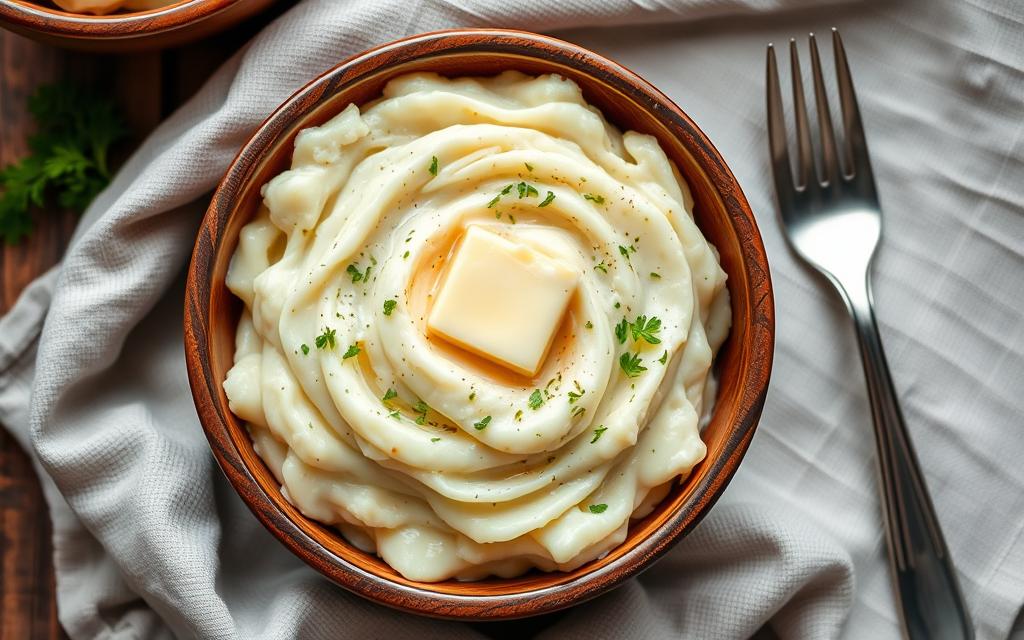
Ever wondered why restaurant mashed potatoes taste so much better than homemade? What secret technique transforms ordinary potatoes into a creamy, dreamy side dish that everyone craves?
Learning how to make mashed potatoes is an essential culinary skill. It makes any meal better. The best mashed potatoes need just a few ingredients and simple techniques. This recipe will help you make a side dish that’s both comforting and impressive.
Creamy mashed potatoes are more than just a side dish. They’re a canvas for flavor, a comfort food that brings warmth to any table. Whether you’re preparing a holiday feast or a weeknight dinner, mastering this mashed potato recipe will make you a kitchen hero.
Key Takeaways
- Choose the right potato variety for maximum creaminess
- Use whole milk and unsalted butter for rich flavor
- Avoid overmixing to prevent gluey texture
- Season generously with salt and pepper
- Experiment with additional mix-ins for unique variations
Choosing the Right Potatoes
Starting with the best potatoes is key to making great mashed potatoes. Not all potatoes are the same. Some are better for that creamy texture we all love.
Types of Potatoes Perfect for Mashing
Russet and Yukon Gold potatoes are top choices for mashed potatoes. They have lots of starch, making them perfect.
- Russet potatoes make light, fluffy mashed potatoes
- Yukon Gold potatoes have a buttery flavor
- Both soak up cream and butter well
Starchy vs. Waxy Potatoes
It’s important to know the difference between starchy and waxy potatoes. Starchy potatoes like Russets and Yukon Golds are best for mashing.
| Potato Type | Starch Content | Mashing Performance |
|---|---|---|
| Russet Potatoes | High | Fluffy, light texture |
| Yukon Gold Potatoes | Medium-High | Creamy, buttery flavor |
| Red Potatoes | Low | Dense, less ideal for mashing |
Organic vs. Conventional Potatoes
Choosing potatoes is more than just looking at starch content. Organic potatoes might taste better and have fewer pesticides. But, conventional potatoes are often cheaper.
Always pick potatoes that are firm and have no blemishes or green spots. The right potato is the first step to making amazing mashed potatoes!
Essential Ingredients for Creamy Mashed Potatoes
To make the best mashed potatoes, pick the right ingredients. Mix simple parts to make potatoes creamy and tasty. Everyone will love it.
Butter: The Flavor Foundation
Choosing between salted and unsalted butter matters. Unsalted butter lets you control salt. For 5 pounds of potatoes, use 1 1/2 to 2 sticks of butter. This makes them rich and smooth.
Milk vs. Cream: Understanding the Difference
Do you prefer milk or cream in mashed potatoes? It’s up to you and how rich you like them. Whole milk makes them light and creamy. Heavy cream makes them rich and fancy.
| Dairy Option | Texture | Recommended Use |
|---|---|---|
| Whole Milk | Light and Creamy | Everyday Mashed Potatoes |
| Heavy Cream | Rich and Luxurious | Special Occasion Dishes |
| Half-and-Half | Balanced | Compromise Between Milk and Cream |
Optional Flavor Enhancers
Make your mashed potatoes even better with these:
- Roasted garlic
- Fresh herbs like chives or parsley
- Cream cheese for extra tanginess
- Grated Parmesan for a savory kick
Pro tip: Taste and adjust as you go. The right salt makes great mashed potatoes even better.
Preparing Your Potatoes
Getting your potatoes ready for mashing is key to a great side dish. The right way to prepare them can really change your dish.

Peeling and Cutting Techniques
Start peeling potatoes with a sharp peeler. Chefs say Yukon Gold or Russet potatoes work best. Here’s how to cut them:
- Choose medium-sized potatoes (1 to 2 inches)
- Cut potatoes into roughly 1½-inch cubes for even cooking
- Aim to create uniform pieces to ensure consistent texture
Rinsing: A Crucial Step
Rinsing potatoes gets rid of extra starch. This makes your mashed potatoes smooth. Rinse the cut potatoes under cold water.
Cooking Methods Compared
There are two main ways to cook potatoes: boiling and steaming. Here’s a quick look:
| Boiling | Steaming |
|---|---|
| Traditional method | Retains more nutrients |
| Cooking time: 15-20 minutes | Cooking time: 12-18 minutes |
| Use cold water, add 1 tbsp salt | Requires less water |
Pro tip: Cook potatoes until they’re fork-tender. This makes them perfect for creamy mashed potatoes.
Cooking the Potatoes
Learning how long to boil potatoes for mashing is key to making perfect mashed potatoes. The cooking time affects the texture and taste of your dish.
Cooking potatoes for mashed potatoes needs careful timing and method. The best boiling time is usually 20-25 minutes. This depends on the potato’s size and type.
Potato Boiling Duration Guide
Knowing the right boiling time stops potatoes from being too mushy or not cooked enough. Here’s a guide:
- Small potato chunks: 15-20 minutes
- Medium-sized potato pieces: 20-25 minutes
- Large potato segments: 25-30 minutes
Testing Potato Doneness
To know if potatoes are cooked right, do a simple test. Stick a fork in them. If it goes in effortlessly, they’re done.
| Potato Type | Boiling Time | Texture Indicator |
|---|---|---|
| Yukon Gold | 20-22 minutes | Soft, creamy interior |
| Russet | 22-25 minutes | Fluffy when pierced |
| Red Potatoes | 18-20 minutes | Slightly firmer texture |
Avoiding Overcooking
Don’t overcook potatoes or they’ll be too wet and gummy. To avoid this, drain them right after checking. Then, put them back in the hot pot. This helps get rid of extra water, making your mashed potatoes light and fluffy.
Mashing Techniques Explained
Learning to mash potatoes is like a special art. It turns simple ingredients into a creamy, tasty side dish. The right way to mash can change everything. It can make your potatoes light and fluffy or dense and gummy.
Tools for Mashing: Handheld vs. Electric Mixer
Choosing between a potato masher and an electric mixer is important. Each tool has its own benefits for getting the perfect mashed potatoes:
- Handheld Potato Masher: Gives a rustic, slightly chunky texture
- Electric Mixer: Makes smoother, more even results

Achieving Your Desired Consistency
The secret to perfect mashed potatoes is knowing about starch and moisture. Russet and Yukon Gold potatoes are the best. They have a lot of starch and not much moisture.
| Potato Type | Starch Content | Mashing Performance |
|---|---|---|
| Russet | High | Fluffy, light texture |
| Yukon Gold | Medium-High | Creamy, smooth consistency |
Common Mashing Mistakes to Avoid
- Don’t over-mash, as it releases too much starch
- Use warm butter and milk slowly
- Mash over low heat to let steam out
- Season well as you go
Pro tip: For the best mashed potatoes, add warm dairy slowly. Use 1/2 – 3/4 cups of evaporated milk. Taste as you go. You want them smooth but with some potato feel.
Flavor Enhancements
Turning plain mashed potatoes into a tasty dish is simple. Flavored mashed potatoes can make your side dish special with a few ingredients and tricks.
Garlic: The Ultimate Flavor Booster
Garlic mashed potatoes are loved by many. They add depth and richness. Here are ways to add garlic:
- Roast garlic cloves until caramelized and soft
- Mince fresh garlic for a sharp, intense flavor
- Use garlic powder for a milder, evenly distributed taste
Fresh Herbs: Nature’s Flavor Enhancers
Herbs can make mashed potatoes brighter and fresher. Some great herbs are:
- Chives – mild onion-like flavor
- Parsley – fresh and bright
- Rosemary – robust and aromatic
- Thyme – subtle and earthy
Cheese: The Creamy Flavor Amplifier
Cheese can make mashed potatoes rich and luxurious. Good cheese choices are:
- Cheddar – sharp and tangy
- Parmesan – nutty and complex
- Cream cheese – ultra-smooth and rich
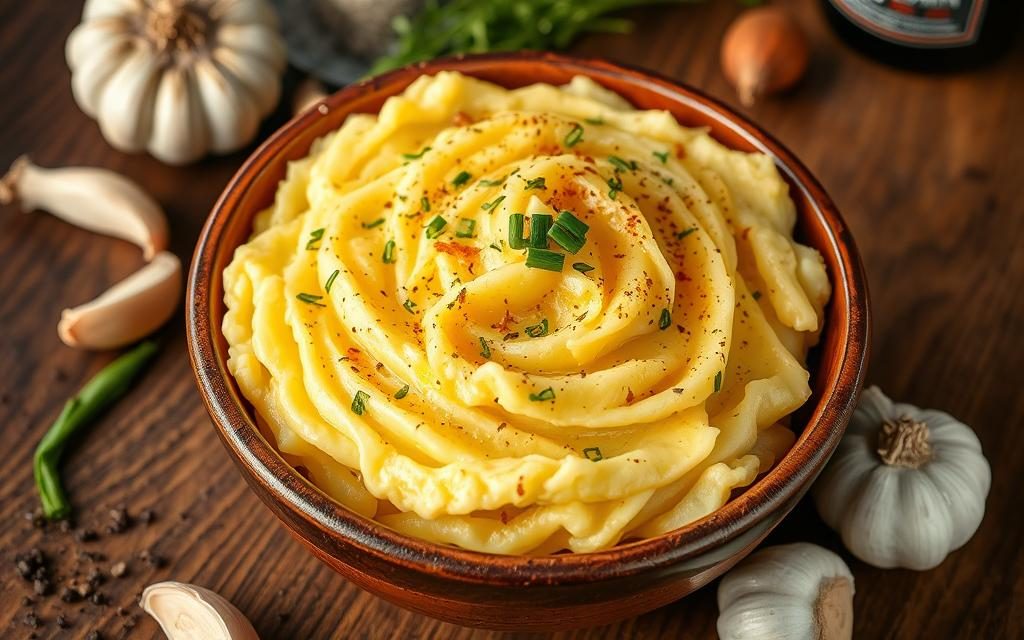
Pro tip: Always taste and adjust seasonings as you go. A pinch of salt, a crack of black pepper, or a dash of your favorite spice can make all the difference in creating memorable, flavor-packed mashed potatoes.
Perfecting the Texture
To get the best mashed potatoes, you need the right tools and skills. It’s all about adding air and keeping the mix just right.
Importance of Air Incorporation
Air is key for fluffy mashed potatoes. Chefs mix gently to avoid a heavy mess. Too much mixing can make potatoes sticky.
Using a Potato Ricer for Smooth Texture
A potato ricer makes your mashed potatoes amazing. It pushes cooked potatoes through tiny holes. This makes them smooth and lump-free.
| Mashing Tool | Texture Result | Effort Level |
|---|---|---|
| Potato Ricer | Smooth, Uniform | Medium |
| Masher | Rustic, Chunky | Low |
| Electric Mixer | Potentially Gluey | High |
Keeping Potatoes Warm During Preparation
It’s important to keep potatoes warm. This helps keep your mashed potatoes perfect. Here’s how:
- Use warm milk and butter
- Keep pot over low heat while mashing
- Cover potatoes with a clean kitchen towel
With these tips, you’ll make mashed potatoes that taste like they’re from a restaurant. They’ll be light and fluffy every time.
Adjusting Seasoning
Seasoning mashed potatoes is like a magic trick. It turns a simple side dish into something special. The secret is using salt wisely at every step.
Salt is very important for flavoring mashed potatoes. Chefs say to use salt carefully. This way, the potatoes taste great without being too salty.
Strategic Salting Techniques
- Start with minimal salt during initial potato preparation
- Add salt gradually after mashing
- Taste test at each stage of preparation
- Consider the overall meal’s flavor profile
Salt Measurement Guidelines
| Potato Quantity | Salt Recommendation | Flavor Impact |
|---|---|---|
| 1 kg Potatoes | 18g (1 tbsp) Salt | Balanced seasoning |
| 3.5 lbs Potatoes | 2 tsp Salt | Subtle enhancement |
Flavor Balancing Strategies
Think about what you’re serving with your mashed potatoes. If it’s with gravy or meat, use less salt. A bit of fresh black pepper can make it taste richer. Don’t forget, butter and cream add flavor too.
The goal is to make mashed potatoes that are a hit. They should be tasty on their own but also match well with your meal.
Storing Leftover Mashed Potatoes
After a tasty meal, knowing how to store mashed potatoes is key. It keeps them creamy and flavorful. Storing them right helps avoid waste and keeps food safe.
Refrigeration Tips for Mashed Potatoes
Homemade mashed potatoes should go in an airtight container in the fridge. The USDA says they last 3-4 days if stored right. Here’s how to keep them fresh:
- Cool mashed potatoes to room temperature before storing
- Use shallow containers for quick cooling
- Seal containers tightly to keep moisture in
Freezing for Long-Term Storage
Freezing mashed potatoes is a great way to keep them longer. The USDA says they stay good for 1-2 months when frozen right.
| Freezing Method | Best Practices |
|---|---|
| Potato Selection | Choose high-starch potatoes like Yukon Gold |
| Fat Content | Add cream and butter for better texture |
| Storage Container | Use freezer-safe airtight containers or bags |
Reheating Techniques That Work
Reheating mashed potatoes gently keeps them creamy. The USDA says to heat leftovers to 165ºF for safety.
- Thaw frozen mashed potatoes in the fridge overnight
- Reheat with these methods:
- Oven (350°F, covered, 20-30 minutes)
- Stovetop (low heat, stir often)
- Microwave (with milk or cream)
- Add milk or cream to make them creamy again
Pro tip: Add roasted garlic, bacon bits, or fresh herbs to make them taste better when reheating.
Mashed Potato Variations to Try
Trying new mashed potato recipes can make this classic dish exciting. You can add new flavors or make it fit special diets. There are many ways to make mashed potatoes different.
Loaded Mashed Potatoes: A Flavor Explosion
Loaded mashed potatoes make a classic dish even better. Add these tasty ingredients for a twist:
- Crispy bacon bits
- Shredded cheddar cheese
- Chopped green onions
- Sour cream dollop
Vegan Mashed Potatoes: Creamy Without Dairy
Vegan mashed potatoes are just as creamy as the traditional kind. Use these plant-based options for creaminess:
- Coconut milk
- Olive oil
- Nutritional yeast
- Roasted garlic
Global Mashed Potato Recipes to Explore
Try mashed potato recipes from around the world. They add international flavors to your meals:
- Irish Colcannon: Potatoes mixed with cabbage or kale
- French Aligot: Cheese-infused potato purée
- Greek Skordalia: Garlic-rich potato dip
From loaded mashed potatoes to vegan options, there’s something for everyone. Try different ingredients and methods to find your favorite mashed potato recipe.
Serving Suggestions for Mashed Potatoes
Make your mashed potatoes stand out by thinking about how to present them. Pairing them with the right dish is key. Roasted chicken, which takes about 1 hour and 15 minutes to prepare, pairs well with mashed potatoes.
The mashed potato presentation can make your meal special. Try serving them in fancy ramekins or making swirls with a piping bag. Adding fresh herbs like rosemary or chives can make them look and taste great.
Choosing the right dish to go with your mashed potatoes is important. Grilled salmon or slow-cooked short ribs work well. They balance the richness of the main dish with the creamy potatoes.
How your dish looks is just as important as how it tastes. Add a pat of butter, some fresh herbs, or crispy bacon bits. This will make your side dish unforgettable and impress your guests.


