
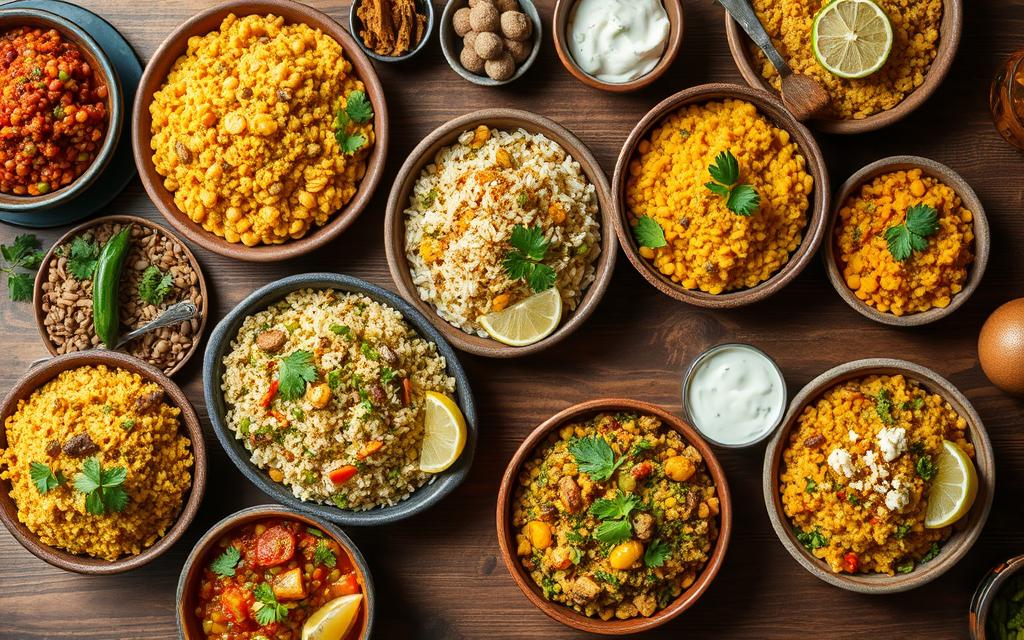
Ever thought one dish could change your meal and health? Meet khichdi, a special Indian dish. It’s all about comfort, health, and being very flexible.
Khichdi is more than food. It’s a big part of Indian cooking. It mixes rice and lentils in a way that’s good for you and tastes great.
Learning to make khichdi opens up a world of tasty options. It’s perfect for when you’re feeling sick or need a fast, healthy meal. The ingredients will be your secret to success in the kitchen.
Key Takeaways
- Discover the versatility of khichdi across multiple recipes
- Learn authentic cooking techniques for perfect consistency
- Explore nutritional benefits of this traditional Indian dish
- Understand how to customize khichdi for different dietary needs
- Master both traditional and modern cooking methods
What is Khichdi and Its Cultural Significance?
Khichdi is a beloved dish in India. It’s more than food; it’s a symbol of unity and healing. This simple dish is loved by many.
Understanding Khichdi’s Origins
Khichdi has been around for centuries. It comes from India’s farming traditions. Made with rice and lentils, it’s a balanced meal for body and soul.
- Originated in ancient Indian cuisine
- Symbolic of agricultural traditions
- Represents simplicity and nutritional balance
Khichdi in Indian Culture
Khichdi is important in Indian culture. It’s a big part of festivals like Makar Sankranti. It symbolizes harvest and renewal.
Families come together to make khichdi. They share stories and traditions. It’s a way to connect and celebrate.
| Cultural Significance | Regional Importance |
|---|---|
| Harvest Festival Staple | Uttar Pradesh Tradition |
| Nutritional Healing Food | Ayurvedic Recommended Dish |
| Community Gathering Meal | Symbol of Unity |
Variations Across Regions
Khichdi is diverse and delicious. Every region in India has its own version. From Sabudana Khichdi in Maharashtra to Bajre Ki Khichdi in Rajasthan, there’s always something new to try.
- Sabudana Khichdi
- Palak Dal Khichdi
- Oats Khichdi
- Bajre Ki Khichdi
Nutritious Ingredients for Perfect Khichdi
Making a tasty and healthy khichdi begins with picking the right stuff. This dish is a mix of good nutrition and great taste. It uses special ingredients that make it a favorite in India.
Essential Grains and Legumes
The base of a healthy khichdi is rice and dal. For the best nutrition, use these important parts:
- White basmati rice (½ cup)
- Moong dal (½ cup) – full of protein
- Go for short-grain rice for a creamier feel
Flavorful Spices and Seasonings
Spices turn a basic khichdi into a tasty, healthy dish. Key seasonings are:
- Cumin seeds
- Turmeric powder
- Ginger
- Green chili
- Hing (asafetida)
- Garam masala
Optional Add-ins for Extra Nutrition
Make your khichdi even better by adding veggies. They add taste and nutrients:
| Vegetable | Nutritional Benefit |
|---|---|
| Carrots | Full of Vitamin A |
| Green Beans | High in Fiber |
| Cauliflower | Low-Calorie Nutrient Powerhouse |
| Peas | Protein and Vitamin K |
Tip: Soak dal and rice for 30-120 minutes before cooking. This makes them easier to digest and cooks them faster. Use a 1:4 water ratio for the perfect khichdi texture.
Basic Khichdi Recipe: A Step-by-Step Guide
Cooking khichdi is easy and tasty. It’s a classic Indian dish that’s simple to make. You just need a few ingredients and basic steps.
To start, know the main ingredients and how to cook them. Khichdi is great because it’s easy to make and can be many things.
Preparing the Ingredients
First, get these key ingredients ready:
- ½ cup long-grain rice
- ½ cup moong dal (yellow mung lentils)
- 1 medium onion, finely chopped
- 1 medium tomato, chopped
- Spices: turmeric, cumin seeds, salt
- 2 tablespoons ghee or oil
Cooking Method: Stovetop vs. Pressure Cooker
How you cook khichdi can change. Stovetop cooking takes about 30-35 minutes. But, a pressure cooker makes it ready in 12-15 minutes.
Tips for Achieving the Right Consistency
The key to great khichdi is the water ratio. Use 3.5 to 4 cups of water for a creamy texture. You can adjust the water to make it drier or softer.
Pro tip: For a pressure cooker, aim for 4-5 whistles. This ensures the rice and lentils are cooked just right.
Popular Khichdi Variations to Try
Khichdi variations take you on a tasty journey through India. This simple dish changes with local ingredients, making it unique. You can find everything from veggie-packed to protein-rich khichdi.
Trying different khichdi styles is fun. You can play with nutrition and taste. Each version adds its own twist to this beloved dish.
Vegetable Khichdi: A Nutritious Delight
Vegetarian khichdi gets even better with colorful veggies. You can add:
- Carrots
- Green peas
- Cauliflower
- Spinach
- Potatoes
Moong Dal Khichdi: Protein-Packed Perfection
Dal khichdi with moong dal is full of protein. It’s easy to digest. This version uses yellow lentils for a creamy taste.
| Khichdi Type | Key Ingredients | Flavor Profile |
|---|---|---|
| Vegetable Khichdi | Rice, Mixed Vegetables | Fresh, Nutritious |
| Moong Dal Khichdi | Rice, Yellow Lentils | Creamy, Protein-Rich |
| Punjabi Khichdi | Rice, Spices, Ghee | Robust, Spicy |
Punjabi Khichdi: Spice-Infused Comfort
Punjabi khichdi is known for its bold spices. It uses a lot of ghee and spices. This makes it a memorable dish.
Health Benefits of Eating Khichdi
Khichdi is a nutritional powerhouse that benefits people of all ages. It’s not just comfort food. It’s a nutritious dish that helps with digestion and overall wellness.
This dish is full of essential nutrients. It’s a balanced meal that supports health in many ways. Rice and lentils together make a complete protein, great for vegetarians and those looking for healthy meals.
Digestive Health and Comfort
Khichdi is known in traditional medicine for its gentle effect on digestion. It offers several key benefits:
- Easily digestible ingredients
- Promotes regular bowel movements
- Supports gut microbiome health
- Helps eliminate toxins naturally
Nutritional Value
The nutritional profile of khichdi is impressive. Green moong beans, a key ingredient, are rich in:
- Manganese
- Potassium
- Magnesium
- Folate
Suitable for All Ages
Khichdi is good for everyone, from babies to the elderly. It’s gluten-free and has a low glycemic index. This makes it helpful for weight management and suitable for different diets.
Ayurvedic traditions see khichdi as a healing food. It supports overall wellness, is light, nourishing, and fits individual health needs.
Cooking Khichdi in One Pot
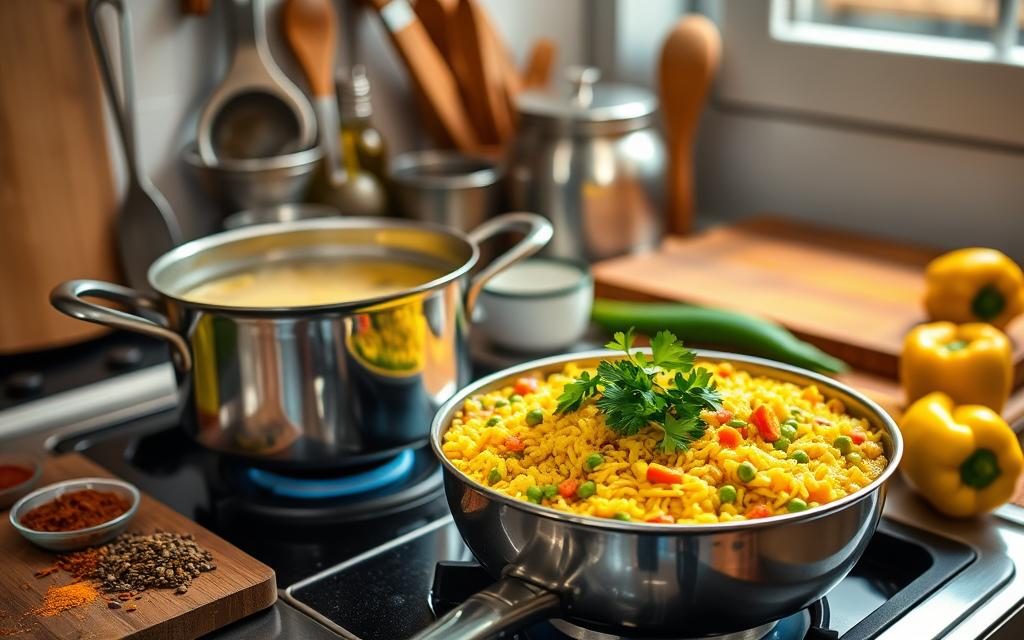
One-pot khichdi is a big win for home cooks looking for a quick, healthy meal. It makes cooking easy while keeping the dish’s traditional taste. This is why it’s a favorite comfort food.
Advantages of One-Pot Cooking
The one-pot khichdi method has many benefits for busy cooks:
- Less kitchen mess
- Shorter cooking time
- Easier prep of ingredients
- Flavors mix well together
Quick Khichdi Recipe for Single-Pot Preparation
Here’s how to make tasty one-pot khichdi:
- Rinse 1 cup rice and 1/2 cup moong dal well
- Put in water in a 1:2 ratio
- Add turmeric, salt, and black pepper
- Cook on medium heat for 20 minutes
Expert Tips for Perfect One-Pot Khichdi
Get the best results with these expert tips:
- Use a heavy-bottomed pot for even heat
- Stir now and then to avoid sticking
- Change water ratio for your liking
- Optional: Add veggies for more nutrition
For a healthy, easy meal, one-pot khichdi is perfect. It offers both convenience and great taste in one dish.
Vegan and Gluten-Free Khichdi Options
Dietary restrictions don’t mean you can’t enjoy khichdi. Now, vegan and gluten-free khichdi options are popular. They offer tasty choices for those with special dietary needs.
Looking into khichdi for special diets is fun. You can make old recipes fit new dietary needs. This way, you keep the dish’s comfort and taste.
Ingredients for Vegan Khichdi
- Replace ghee with coconut oil or olive oil
- Use plant-based milk for added creaminess
- Incorporate nutritional yeast for a cheesy flavor
- Select protein-rich lentils like moong dal
Ensuring Gluten-Free Alternatives
To make gluten-free khichdi, pick the right ingredients. Choose grains that are naturally gluten-free. They should be nutritious and have a good texture:
| Grain Option | Nutritional Benefit |
|---|---|
| Quinoa | High protein, complete amino acids |
| Millet | Rich in minerals, easily digestible |
| Buckwheat | Nutrient-dense, supports heart health |
Tasty Variations for Special Diets
Trying vegan khichdi is fun. Adding roasted veggies, fresh herbs, or nutritional yeast makes it taste great and is good for you.
- Quinoa-based khichdi for extra protein
- Vegetable-loaded versions for increased nutrients
- Spice blends to elevate flavor without compromising dietary restrictions
Khichdi is very versatile. It fits many diets, like vegan, gluten-free, or special diets. There’s a khichdi recipe for everyone to enjoy.
Instant Pot Khichdi: A Modern Approach
Modern cooking tech has changed old recipes. Instant Pot khichdi is a mix of new ease and old tastes. It makes cooking quick khichdi easy and fast.
Benefits of Using an Instant Pot for Khichdi
Using an Instant Pot for khichdi is a game-changer. This kitchen tool makes cooking faster and better. It helps in many ways:
- It cooks much faster
- It cooks everything the same way
- You don’t have to watch it all the time
- Cleaning up is easy
- It keeps the food’s nutrients
Instant Pot Khichdi Recipe
Making tasty Instant Pot khichdi is easy and quick. Here’s how to make it:
- Rinse 1 cup rice and 1/2 cup moong dal
- Add ingredients to Instant Pot
- Include spices like turmeric, cumin, and salt
- Add 3 cups water
- Cook on low pressure for 12 minutes
- Let it cool down for 10 minutes
Adjusting Cooking Times
Some rice types need different cooking times. Basmati rice cooks faster than brown rice. Try different water amounts to get the right khichdi texture.
| Rice Type | Cooking Time | Water Ratio |
|---|---|---|
| White Rice | 12 minutes | 3:1 |
| Brown Rice | 15-18 minutes | 3.5:1 |
Follow these tips to make perfect Instant Pot khichdi. You’ll have a healthy meal ready in no time.
Tips for Serving and Pairing Khichdi
Khichdi is a versatile dish that can be a simple meal or a special experience. The right serving and pairings can make it a joy to eat. Learning how to serve khichdi can turn it into a wonderful meal.
Ideal Accompaniments
Choosing the right sides can make your meal better. Here are some tasty options:
- Crispy papad
- Fresh yogurt or dairy-free alternative
- Tangy vegetable pickle
- Coconut chutney
Garnishing for Extra Flavor
Adding garnishes can make your khichdi look and taste better. Try these:
- Freshly chopped cilantro
- Crispy fried onions
- Generous drizzle of ghee
- Roasted cashew nuts
Presentation Ideas
How you present khichdi can make it more appealing. Here are some ideas:
| Serving Style | Recommended Approach |
|---|---|
| Plating | Use white or earthenware bowls to highlight the dish’s color |
| Arrangement | Place side dishes neatly around the khichdi |
| Temperature | Serve hot with steam rising for maximum appeal |
Pro tip: Always serve khichdi immediately after cooking to maintain its creamy texture and optimal flavor.
Storing and Reheating Leftover Khichdi
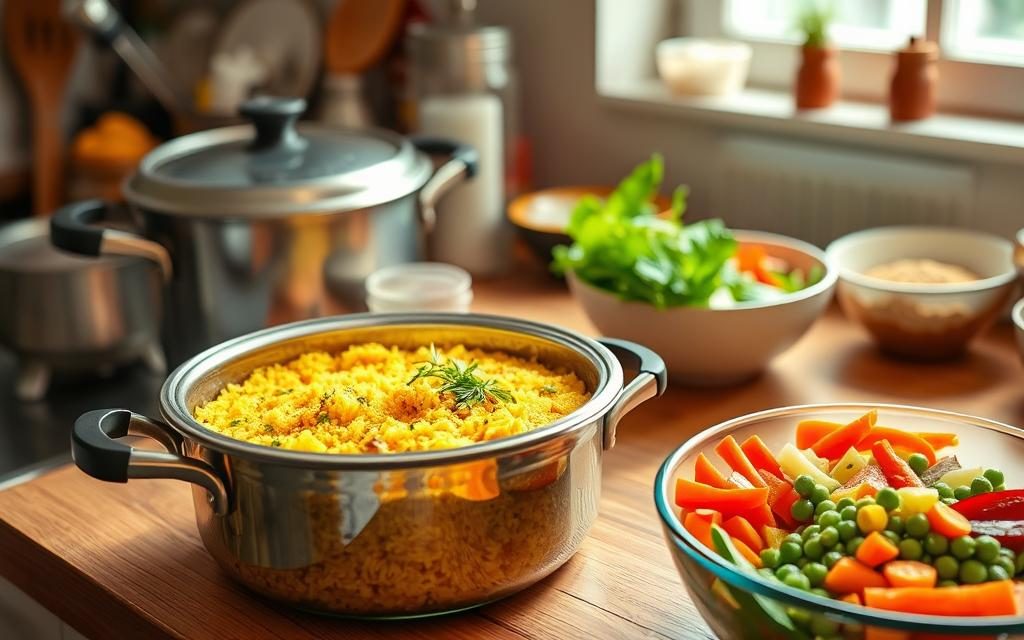
Keeping khichdi tasty means storing and reheating it right. Leftover khichdi is great for a quick meal if you know how. Here are some tips for storing and reheating khichdi to enjoy it later.
Best Storage Practices
Storing khichdi well keeps it fresh and safe. Here’s how to do it:
- Cool the khichdi completely before storing
- Use airtight containers for refrigeration
- Store in the refrigerator for up to 3-4 days
- For longer storage, freeze in sealed containers
Reheating Methods for Optimal Taste
Reheating khichdi can be tricky. But, with the right method, it can taste like new. Here are some ways to reheat it:
| Reheating Method | Tips |
|---|---|
| Stovetop | Add a splash of water, stir frequently, heat on low flame |
| Microwave | Cover with damp paper towel, stir every 30 seconds |
Only reheat what you’re going to eat. This keeps the rest fresh. Adding ghee or butter while reheating makes it taste better and keeps it moist.
Try these tips to enjoy your khichdi, whether it’s new or leftover.
Common Mistakes to Avoid When Making Khichdi
Making perfect khichdi needs focus and knowing how to cook. Many people struggle, which can mess up the taste and feel. Learning how to make great khichdi will make your meals better every time.
Avoiding Ingredient Overcooking
One big mistake is cooking rice and dal too long. This makes them mushy. Here’s how to avoid this:
- Use a 1:3 ratio of rice to water
- Soak rice and dal for at least one hour before cooking
- Cook on medium heat to keep ingredients right
- Check how it’s doing every few minutes
Essential Seasoning Techniques
Not adding the right spices can make khichdi taste bad. The right mix of turmeric, cumin, and ghee makes it taste great.
Texture Preferences Matter
Everyone likes their khichdi differently. Some like it thick, others like it grainy. Change the water amount to get it just right:
- Porridge-style: Use 1:4 rice and dal to water ratio
- Drier texture: Use 1:2.5 rice and dal to water ratio
- Try different water amounts to find your favorite
By avoiding these mistakes, you’ll make a tasty, comforting meal. It will please your family and keep traditional cooking alive.
Creative Uses for Leftover Khichdi
Turning leftover khichdi into new dishes is fun. It helps save food and keeps meals fresh. You can make old meals exciting again.
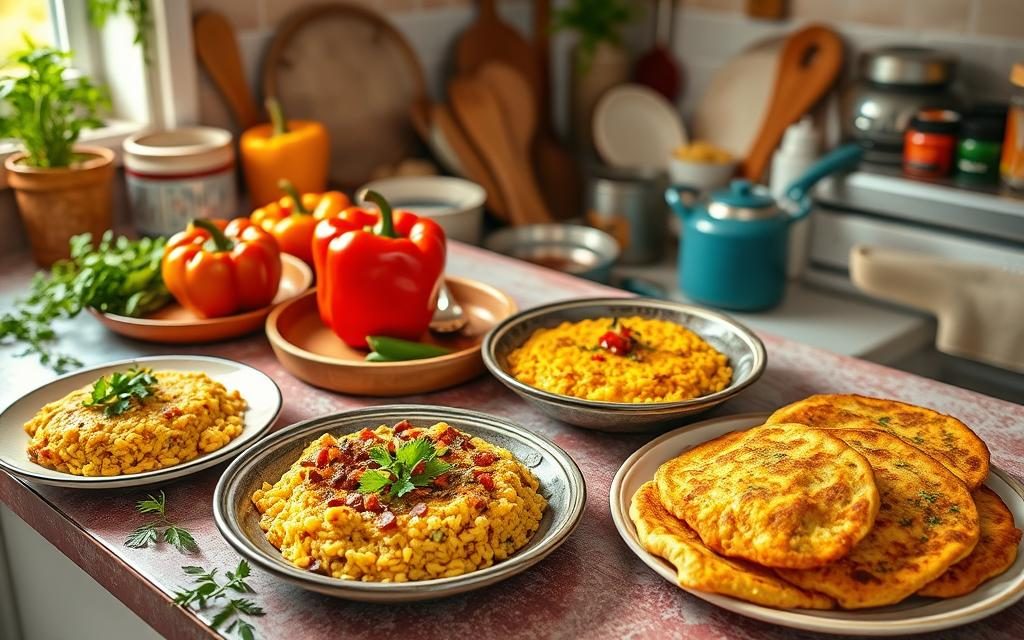
There are many ways to make leftover khichdi into tasty dishes. A little creativity can turn it into something everyone will enjoy.
Khichdi Pancakes: A Crispy Twist
Make crispy pancakes from leftover khichdi. Here’s how:
- Mix leftover khichdi with whole wheat flour
- Add spices like red chili powder and coriander powder
- Form flat pancake-like patties
- Pan-fry until golden and crisp
Khichdi Fritters: Crunchy Snack Delight
Make tasty fritters from khichdi. They’re great for snacks or appetizers:
- Bind leftover khichdi with breadcrumbs
- Add finely chopped onions and green chilies
- Shape into small bite-sized fritters
- Deep fry or air fry until crispy
Reducing Food Waste with Innovation
Using creative ideas for khichdi helps reduce waste. Try new things with leftover khichdi to make meals exciting.
You can also use khichdi in sandwiches, rice bowls, or stir-fries. Just be creative and have fun with it.
Conclusion: Enjoying Khichdi Anytime
Khichdi is more than a meal in Indian cuisine. It’s a comfort food that fits every family’s taste and needs. It’s great for quick dinners or when you need to feel better.
Family traditions keep khichdi alive for generations. Kids can help cook and learn old recipes. This way, families keep their culinary heritage alive and make memories.
Trying different khichdi recipes lets home cooks play with flavors and textures. You can make it plant-based or gluten-free. Khichdi shows how Indian cuisine is simple yet adaptable.
Khichdi is a timeless favorite that brings families together. It’s a symbol of warmth, nutrition, and home in every bite. Its lasting appeal shows that simple dishes can be the most meaningful.


