
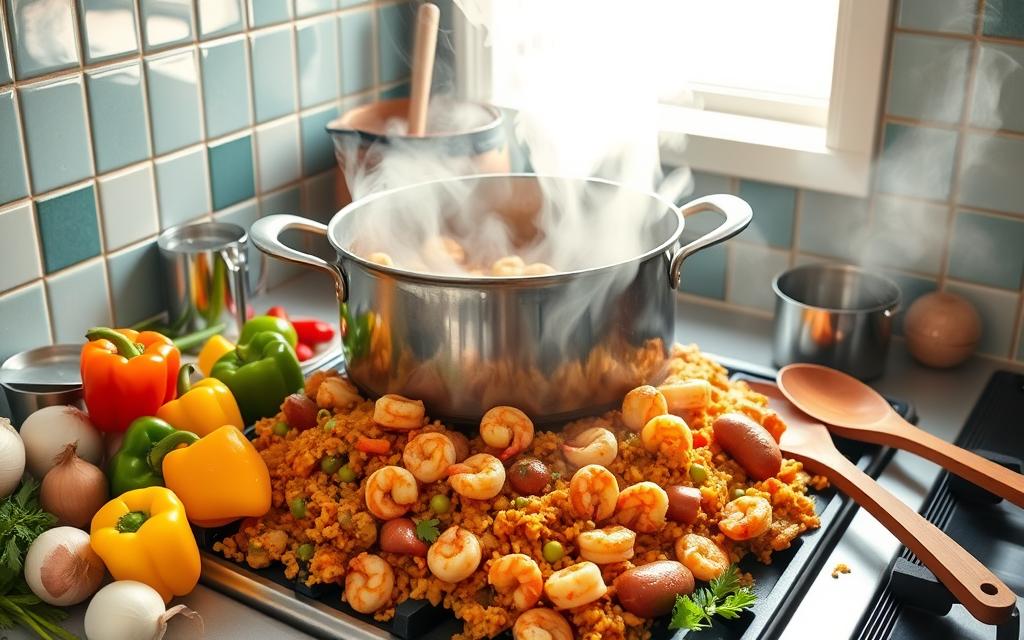
Ever wondered why jambalaya is the ultimate one-pot meal? It turns simple ingredients into a culinary masterpiece. This Cajun dish brings flavors together, making dinner special.
Jambalaya is more than a rice dish. It’s a celebration of Louisiana’s rich food heritage. It’s loved in New Orleans and kitchens across America. It’s perfect for everyone, whether you’re a pro or just starting.
Get ready to try nine delicious jambalaya recipes. They’ll take you to the heart of Cajun cooking. We’ll share traditional techniques, secret ingredients, and tips for making it a hit.
Key Takeaways
- Discover authentic jambalaya recipes from Creole to Cajun styles
- Learn professional cooking techniques for perfect rice dishes
- Explore protein and vegetable variations for custom jambalaya
- Master the art of layering flavors in one-pot meals
- Understand the cultural significance of this classic Louisiana dish
What is Jambalaya?
Jambalaya is a famous dish from Louisiana. It’s a mix of different cultures, making a tasty meal. It’s loved by many for its rich flavors.
The story of jambalaya is interesting. It comes from European, African, and Native American cooking. It’s a dish from Louisiana, showing a mix of flavors and ways of cooking.
Origins of Jambalaya
Creole jambalaya comes from New Orleans. Cajun jambalaya is from rural Louisiana. Both use rice, brought by different cultures.
- European settlers introduced rice cultivation
- African influences shaped cooking techniques
- Native American ingredients contributed unique flavors
Traditional Ingredients
The ingredients in jambalaya make a great mix of tastes. The “holy trinity” of onions, celery, and bell peppers is key. It gives jambalaya its special flavor.
| Ingredient Category | Common Components |
|---|---|
| Proteins | Chicken, sausage, shrimp |
| Vegetables | Onions, celery, bell peppers |
| Seasonings | Cajun spices, salt, herbs |
Different Regions and Variations
There are many ways to make jambalaya. Creole jambalaya has tomatoes, making it red. Cajun jambalaya uses browned meats for extra taste.
Over 1,000 people love jambalaya. It’s a dish that brings people together with its warm, tasty flavors.
Essential Ingredients for Jambalaya
Making great jambalaya needs the right ingredients. They add depth, flavor, and true taste to this Louisiana favorite. Knowing what to use makes your meal special, just like Creole and Cajun dishes.
Proteins to Use
Choosing the right proteins is key for a tasty jambalaya. Here are some top picks:
- Chicken thighs for rich, tender meat
- Andouille sausage for smoky, spicy flavor
- Shrimp for a delicate seafood touch
- Polska Kielbasa as an alternative sausage
Vegetables and Aromatics
The “holy trinity” of jambalaya is its veggies. These are the heart of the dish:
- Yellow onions
- Green bell peppers
- Celery
- Green onions for garnish
- Minced garlic for depth
Rice Options
Choosing the right rice is important for jambalaya’s texture. Long-grain white rice is the classic choice. But, you can try other types too.
| Rice Type | Characteristics | Best For |
|---|---|---|
| Long-grain white rice | Traditional, fluffy texture | Classic jambalaya recipes |
| Medium-grain rice | Slightly stickier consistency | Creole-style jambalaya |
| Basmati rice | Aromatic, light flavor | Modern interpretations |
Pro tip: Pick a rice that soaks up flavors well without getting mushy.
The Basic Jambalaya Cooking Method
Learning to cook jambalaya is all about mastering key techniques. These methods turn simple ingredients into a delicious one-pot meal. This dish from Louisiana mixes rich flavors and hearty ingredients in a special way.
When cooking jambalaya, you layer ingredients to add depth. This way, each part brings its own flavor. It makes the dish unforgettable.
Preparing the Ingredients
Good jambalaya starts with the right ingredients. First, get your proteins and veggies ready. A basic recipe includes:
- 3 tablespoons olive oil
- 2 boneless skinless chicken breasts
- 1 pound andouille sausage
- Bell peppers, celery, jalapeño
- White onion and garlic
Layering Flavors
The key to great jambalaya is layering flavors. Brown the meats first for a rich base. Then, sauté the holy trinity of veggies – onions, bell peppers, and celery.
Cooking the Rice
Getting the rice right is important in jambalaya. Mix rice with seasoned oil to soak up flavors. Then, add chicken stock and simmer until the rice is tender.
| Ingredient | Quantity | Purpose |
|---|---|---|
| Chicken Stock | 2.5 cups | Liquid Base |
| Long-Grain White Rice | 2 cups | Main Starch |
| Cajun Seasoning | 2 tablespoons | Flavor Enhancement |
Cooking jambalaya takes about 30-40 minutes. It makes a dish that feeds 6-8 people. Home cooks give it a 4.8-star rating.
Classic Creole Jambalaya Recipe
The new orleans jambalaya is a true culinary masterpiece. It captures the spirit of Louisiana’s cooking traditions. This recipe brings the flavors of South Louisiana to your kitchen, mixing cultures into one tasty dish.
Creole cuisine tells a story through its tomato-based jambalaya. This dish is known for its red color and complex flavors. Let’s explore the ingredients and techniques that make it special.
Key Ingredients for Authentic Creole Jambalaya
- Andouille sausage
- Chicken thighs
- Fresh shrimp (41/50 count)
- The holy trinity (onions, celery, green bell peppers)
- Crushed tomatoes
- Long-grain white rice
- Creole seasoning
Nutritional Breakdown
| Nutrient | Amount |
|---|---|
| Calories | 600 kcal |
| Protein | 35.5g |
| Carbohydrates | 39.3g |
| Fat | 34.4g |
Step-by-Step Cooking Instructions
- Brown meats in butter and olive oil
- Sauté vegetables until soft
- Add crushed tomatoes and Creole seasoning
- Stir in long-grain rice
- Pour chicken broth and simmer
- Add shrimp during last 5 minutes of cooking
Tips for Authentic Flavor
To get authentic creole jambalaya, follow these tips:
- Use homemade chicken stock for deeper flavor
- Allow rice to develop a slight crispy bottom
- Adjust seasonings to personal taste
- Let dish rest 10 minutes before serving
This new orleans jambalaya brings people together. It celebrates Louisiana’s rich culinary heritage with every bite.
Cajun Jambalaya: A Spicier Twist
Rural Louisiana jambalaya is very spicy. It’s different from other kinds because of its bold flavors. This dish is all about hearty cooking and strong tastes.
Ingredients that Heat Things Up
Spicy jambalaya needs special ingredients for its unique taste:
- Andouille sausage (smoked pork sausage)
- Tasso ham
- Cayenne pepper
- Hot sauce
- Dark roux for deep flavor
Cooking Techniques Unique to Cajun Style
Cajun jambalaya is different from Creole because it doesn’t use tomatoes. It focuses on browned meats. Chefs make a dark fond by caramelizing proteins. This adds deep flavors.
| Technique | Purpose |
|---|---|
| Deep browning meats | Develops rich, intense flavor |
| Using cast-iron skillet | Enhances heat distribution |
| One-pot cooking method | Preserves authentic texture |
Serving Suggestions
For a real Cajun taste, serve your jambalaya with:
- Extra hot sauce on the side
- Warm cornbread
- Cold beer or sweet tea
Pro tip: Let the jambalaya rest for 10-15 minutes after cooking. This lets the flavors mix well.
Seafood Jambalaya Variations
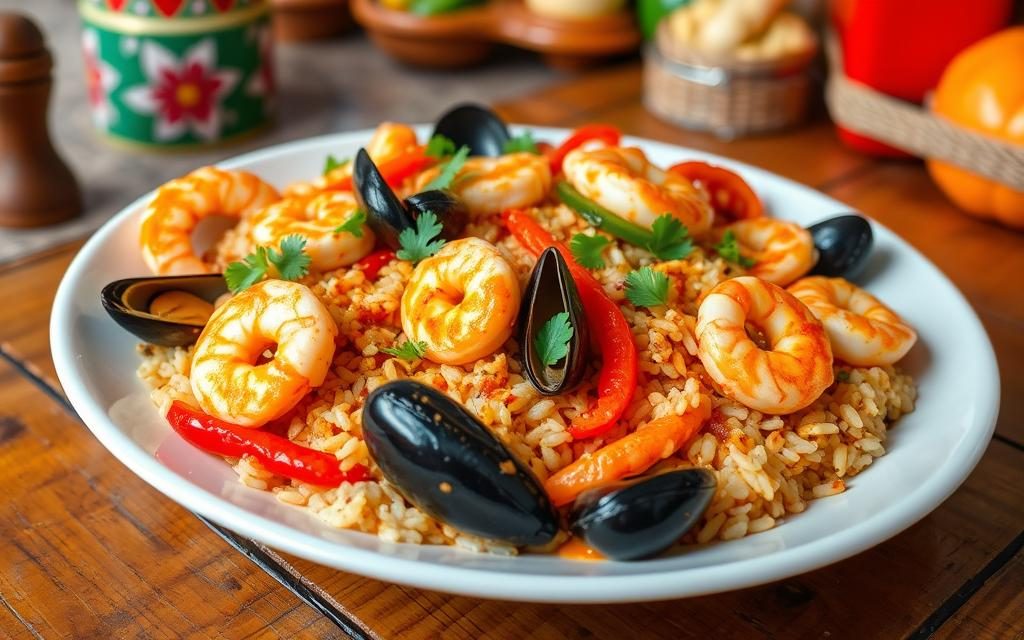
Dive into the delicious world of seafood jambalaya. It’s a vibrant dish that brings the ocean’s bounty to your dinner table. This coastal twist on the classic Louisiana favorite is a seafood lover’s dream.
Choosing the Right Seafood
Selecting premium seafood is key for an exceptional seafood jambalaya. The best options include:
- Fresh shrimp jambalaya featuring plump, sweet Gulf shrimp
- Crawfish jambalaya with tender Louisiana crawfish
- Mixed seafood combinations with crab, white fish, and shellfish
Combining Flavors
Creating a harmonious seafood jambalaya requires careful flavor balancing. Pair delicate seafood with robust spices and smoky sausage to create a complex taste profile that truly sings.
Ideal Cooking Times
Timing is everything when preparing seafood jambalaya. To prevent overcooking, follow these guidelines:
- Shrimp: Add in the last 5-7 minutes of cooking
- Crawfish: Incorporate during the final 5-10 minutes
- White fish: Gently fold in during the last 3-5 minutes
By following these tips, you’ll create a seafood jambalaya that’s bursting with flavor and perfectly cooked seafood.
Vegetarian and Vegan Jambalaya
Turning jambalaya into a plant-based dish is fun and creative. Now, vegetarian and vegan jambalaya are big hits. They offer tasty options without meat.
Protein Alternatives for Plant-Based Jambalaya
For a filling vegan jambalaya, you need new protein sources. Here are some great ones:
- Vegan sausages
- Tempeh crumbles
- Seitan chunks
- Lentils
- Beans (black, kidney, or pinto)
- Jackfruit
Flavorful Additions to Enhance Plant-Based Jambalaya
To get the real jambalaya taste, add these:
- Smoked paprika
- Liquid smoke
- Vegan Worcestershire sauce
- Nutritional yeast
- Cajun seasoning blend
Cooking Techniques for Vegetable-Packed Jambalaya
To make great plant-based jambalaya, use these cooking tips:
| Technique | Purpose |
|---|---|
| Sautéing Vegetables | Develop deep, caramelized flavors |
| Using Vegetable Broth | Enhance overall taste profile |
| Layering Spices | Create complex flavor dimensions |
The best plant-based jambalaya has lots of veggies, protein, and spices. With these tips, your vegan jambalaya will be as good as the old-fashioned kind.
One-Pot Jambalaya Recipes
Cooking delicious meals doesn’t have to be hard. One-pot jambalaya is perfect for easy meals with less cleanup. It makes a complex dish simple and tasty.
Advantages of One-Pot Cooking
One-pot jambalaya has many benefits for cooks:
- Simplified preparation and cooking process
- Minimal kitchen cleanup
- Enhanced flavor development through integrated cooking
- Reduced cooking time
- Less kitchen equipment required
Popular One-Pot Recipes
There are many one-pot jambalaya recipes to try:
| Protein Combination | Cooking Time | Serving Size |
|---|---|---|
| Chicken & Andouille Sausage | 45 minutes | 8 people |
| Shrimp & Sausage | 35 minutes | 6 people |
| Vegetarian Option | 40 minutes | 4-6 people |
Tips for Reducing Cleanup
Here are some tips for easy cleanup:
- Prep ingredients before starting cooking
- Use a large Dutch oven or heavy-bottomed pot
- Brown meats first, then set aside
- Use the same pot for vegetables and rice
- Use pot lid to strain excess oil
One-pot jambalaya makes cooking easy and fun. You can make great meals with little effort.
Instant Pot Jambalaya
Cooking jambalaya is now super easy with the Instant Pot. This method makes a dish that used to take a lot of time into a quick one. It’s full of flavor and ready fast.
Why Choose an Instant Pot for Jambalaya?
The Instant Pot is great for making jambalaya. Here’s why:
- It cooks much faster
- It keeps flavors and nutrients in
- It makes cooking easier
- It cleans up the kitchen less
Essential Instant Pot Cooking Instructions
Here’s how to make your instant pot jambalaya:
- Use the sauté function to brown meats and veggies
- Add all ingredients to the pot
- Seal and cook on high pressure for 8 minutes
- Let it sit for 5 minutes after cooking
Pro Tips for Perfect Pressure Cooker Jambalaya
For the best jambalaya, follow these tips:
- Rice texture: If it’s not right, add a bit more liquid and cook for 1-2 more minutes
- Vegetable consistency: Cook veggies a bit less for them to be softer
- Flavor enhancement: Use lots of Cajun seasoning
- Rice selection: Long-grain white rice works best
Tips for Perfect Jambalaya
Making the best jambalaya takes skill and care. Learning how to cook jambalaya can make a simple meal special. It’s all about the texture, seasoning, and how you prepare it.
Achieving the Right Jambalaya Texture
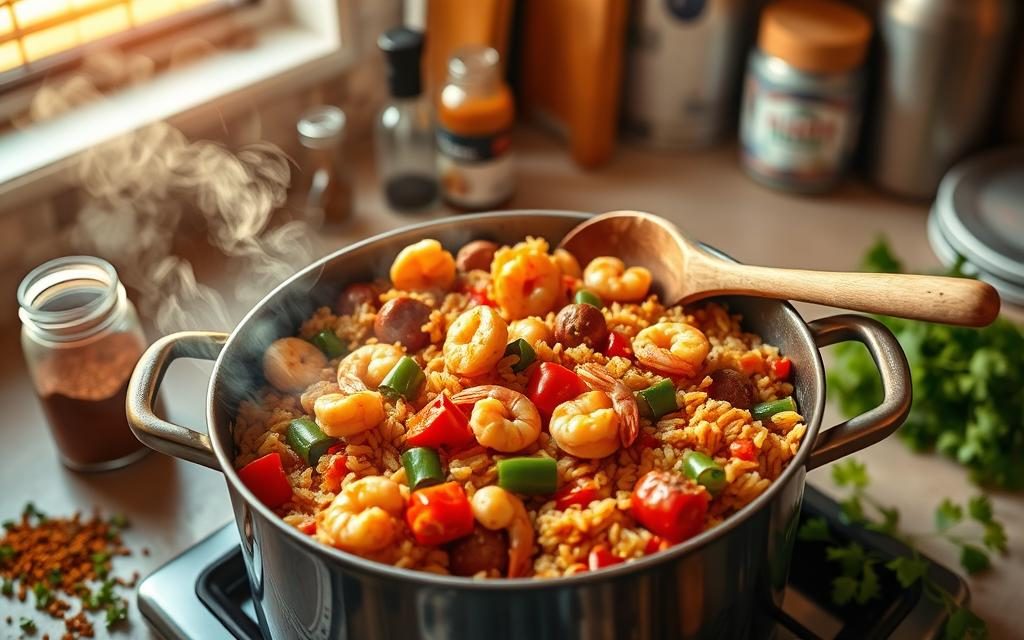
Getting the jambalaya texture right is key. The rice should be fluffy but a bit sticky. It should soak up all the flavors. Here are some tips for the perfect texture:
- Use long-grain white rice for the best results
- Keep the right amount of liquid to rice (usually 2:1)
- Don’t stir too much to avoid mushy rice
- Let the rice rest for 5-10 minutes after cooking
Balancing Jambalaya Seasoning
Seasoning jambalaya is an art. Start with a little spice and add more slowly. You want a mix that’s just right, not too strong.
- Start with Cajun seasoning blend
- Add fresh herbs like thyme and parsley
- Keep tasting and adjusting the seasoning as you go
- Use smoked paprika for extra depth
Common Mistakes to Avoid
Even skilled cooks can make mistakes with jambalaya. Know these common errors to avoid a bad dish:
- Don’t overcrowd the pan at the start
- Don’t add too much liquid
- Don’t cook seafood too long, it gets tough
- Don’t skip making a flavorful base
Great jambalaya comes from patience, practice, and love for cooking.
Serving Jambalaya: What to Pair It With
Creating a great jambalaya meal is more than just the main dish. Choosing the right side dishes can make your meal amazing. It’s about mixing flavors and textures for a memorable meal.
Side Dishes That Complement Jambalaya
For a good jambalaya meal, try different side dishes. Southern food has many tasty options that go well with jambalaya’s spicy flavors.
- Crispy Cornbread Muffins
- Classic Southern Coleslaw
- Roasted Garlic Green Beans
- Creamy Potato Salad
- Fried Okra
- Sweet Potato Fries
Beverage Pairings
The right drink can make jambalaya even better. Cold drinks help cool down the spicy taste.
| Beverage Type | Flavor Profile |
|---|---|
| Cold Beer | Refreshing, cuts through spice |
| Sweet Tea | Southern classic, smooth sweetness |
| Crisp White Wine | Light, acidic complement |
Jambalaya Presentation Tips
How you present jambalaya can make it unforgettable. Focus on making it look good and adding garnishes.
- Use a large, colorful serving bowl
- Garnish with fresh chopped green onions
- Sprinkle fresh parsley on top
- Offer hot sauce on the side
There’s no one right way to pair side dishes with jambalaya. Try new things, have fun, and make a meal that you love.
Storing and Reheating Jambalaya
Making jambalaya is a big job. It needs time and skill. But, knowing how to store and reheat it keeps its flavor and texture great.
Proper Storage Techniques for Leftover Jambalaya
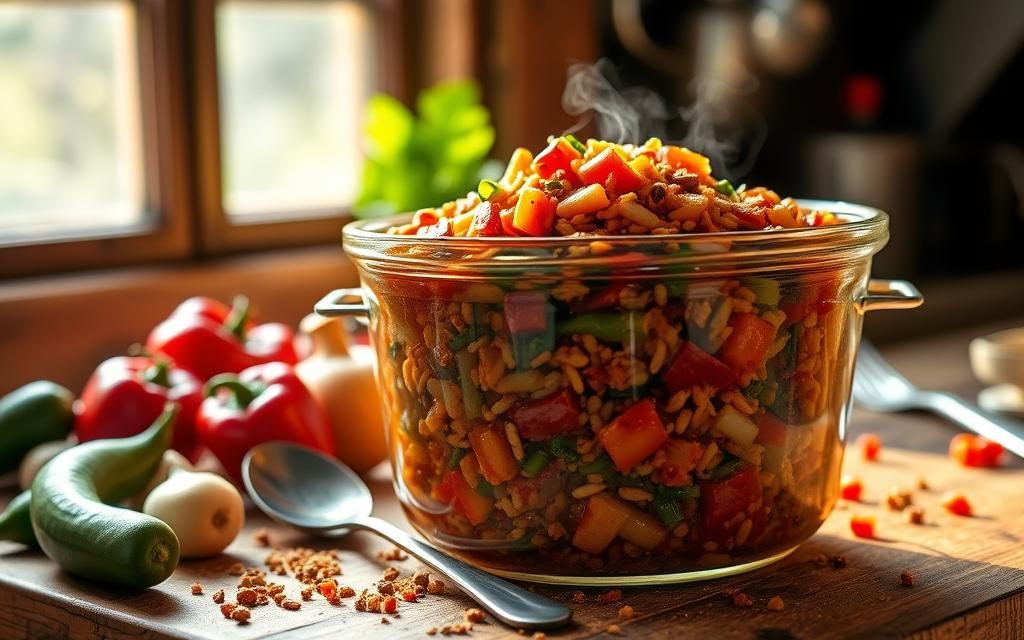
Storing jambalaya is important for safety and keeping it fresh. Here are some tips to keep it yummy:
- Cool the jambalaya completely before storing
- Use airtight containers or heavy-duty freezer bags
- Label containers with preparation date
- Refrigerate for up to 4 days
- Freeze for maximum 3 months
Best Practices for Reheating Jambalaya
Reheating jambalaya right is key. You want it moist and not dry. Here’s how to do it:
- Stovetop method: Reheat on medium-low heat
- Add a splash of broth or water to maintain moisture
- Stir occasionally to distribute heat evenly
- Ensure internal temperature reaches 165°F
Maintaining Flavor and Texture
Keeping jambalaya’s taste and texture is important. Don’t reheat it too many times. Use gentle heat and add liquid to keep it moist.
| Storage Method | Maximum Storage Time | Recommended Reheating Method |
|---|---|---|
| Refrigerator | 4 days | Stovetop with added broth |
| Freezer | 3 months | Thaw in refrigerator, reheat gently |
Pro tip: Freezing in portions makes reheating easier and more convenient.
Conclusion: Enjoying Your Jambalaya Experience
Jambalaya traditions show the rich culture of Louisiana. They invite us to a culinary journey. It’s more than just cooking; it’s a celebration of heritage and community.
Customizing jambalaya lets you show your cooking style. You can make it spicy or tomato-based. Try different proteins and spices to make it your own.
Jambalaya’s history is fascinating. It comes from Spanish paella and Louisiana’s traditions. Cooking and sharing jambalaya connects us through food.
Sharing with Family and Friends
Jambalaya is great for gatherings. It turns a meal into a special moment. It’s perfect for big events and family reunions.
Making It Your Own
Make jambalaya your own. Use fresh ingredients and try new seasonings. This way, you’ll create a family favorite for years.
Embracing Cultural Traditions
Learning about jambalaya’s history is important. It keeps a tradition alive. Each dish tells a story of culture and joy.


