
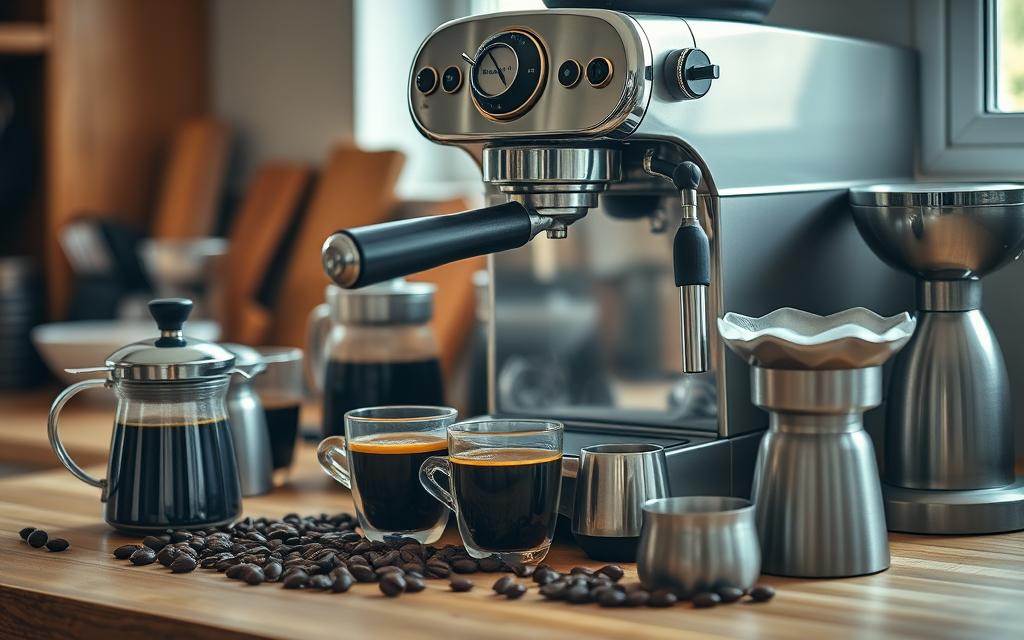
Ever wondered why your homemade espresso never quite matches the coffee shop experience? Making the perfect espresso shot is an art. It mixes precision, technique, and passion. Whether you love coffee or are new to brewing, learning how to make espresso can change your morning.
Brewing espresso is more than just pressing a button. It’s a delicate process. You need to know about bean selection, grind size, and how to extract the coffee. With the right knowledge and tools, you can make espresso as good as a restaurant’s in your kitchen.
This guide will teach you everything about brewing espresso. You’ll learn about choosing the right espresso machine and pulling the perfect shot. We’ll make the brewing process easy to understand. You’ll get foolproof techniques to improve your espresso-making skills.
Key Takeaways
- Learn essential techniques for brewing professional-grade espresso
- Understand the importance of coffee bean selection and roast
- Master temperature and extraction principles
- Discover equipment needed for exceptional espresso
- Troubleshoot common brewing challenges
Understanding Espresso Basics
Espresso is more than coffee. It’s a special art that turns simple things into a drink full of flavor. To start, you need to know what makes espresso unique and how it’s made.
What Is Espresso?
Espresso is made by pushing hot water through very fine coffee beans. This makes a small, strong drink. It’s usually 1-2 ounces and takes 25-30 seconds to make.
This process makes a special crema. The crema is the golden-brown foam on top. It shows a good espresso.
Key Ingredients for Espresso
- High-quality coffee beans (freshly roasted)
- Filtered water (90-95 degrees Celsius)
- Precise grinding technique
- Consistent brewing pressure (7-9 bars)
Espresso vs. Regular Coffee
Espresso is different from regular coffee. It needs careful preparation. Here’s why:
| Characteristic | Espresso | Regular Coffee |
|---|---|---|
| Brewing Time | 25-30 seconds | 3-5 minutes |
| Grind Size | Fine | Medium-coarse |
| Pressure | 9 bars | No pressure |
| Caffeine Concentration | Higher per ounce | Lower per ounce |
Learning about espresso takes time and effort. It’s about mastering the art of coffee. Every shot is a story of flavor and skill.
Choosing the Right Equipment
Choosing the right espresso equipment can make your coffee experience amazing. There are many espresso machines for beginners and coffee lovers.
Espresso Machines: Manual vs. Automatic
Espresso machines come in two main types. They suit different skill levels and tastes:
- Semi-Automatic Machines: Loved by 75% of home baristas, they mix control and ease
- Super-Automatic Machines: Great for those who want easy use and grinders built-in
Prices vary a lot. Machines under $1,000 have plastic and brushed steel. But, more expensive ones are stronger.
Essential Tools for Making Espresso
To make the perfect espresso, you need some key tools:
- 58mm portafilter (the best size)
- E61 brew group for great performance
- PID controller for exact temperature control
The Importance of a Good Grinder
A top-notch burr grinder is key for good espresso. It should grind evenly and adjust finely for different beans and roasts.
Experts say your grinder is as vital as your espresso machine. A good grinder can really boost your espresso at home.
Selecting the Perfect Coffee Beans
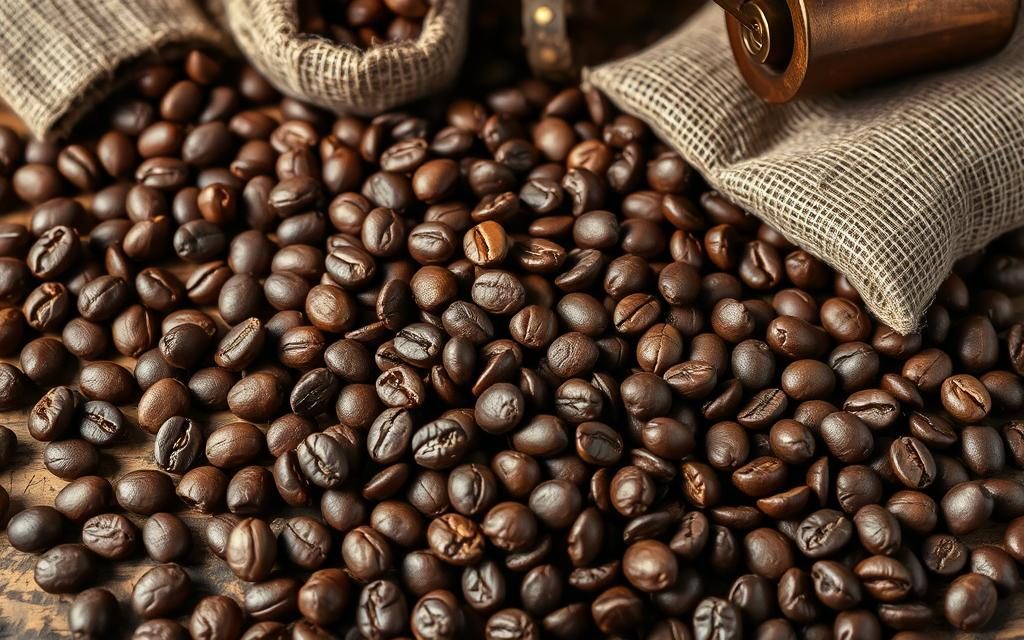
Choosing the right espresso coffee beans is key for a great espresso. The world of espresso beans has many flavors, roasts, and types. These can make your coffee taste like a pro’s.
Types of Coffee Beans for Espresso
There are two main types of espresso coffee beans: Arabica and Robusta. Arabica beans taste smooth and mild, with hints of sugar and berries. Robusta beans are stronger and have more caffeine.
- Arabica: Sweet, soft flavors with fruit notes
- Robusta: Strong, grain-like taste with a peanutty aftertaste
- Premium blends: Typically combine 80-90% Arabica with some Robusta
Freshness Matters: Understanding Roast Dates
Coffee bean freshness is very important for good espresso. Espresso roasts are best used within 7 to 21 days after roasting. This ensures the best flavor.
| Roast Level | Flavor Profile | Recommended Use |
|---|---|---|
| Light Roast | Acidic, original bean flavor | Bright, complex espresso |
| Medium Roast | Balanced, slightly sweet | Versatile espresso drinking |
| Dark Roast | Bold, chocolatey, smoky | Traditional Italian-style espresso |
Recommended Brands for Espresso
When picking espresso coffee beans, think about single-origin or blends. Ethiopian beans have floral and fruity tastes. Sumatran beans are earthy and full-bodied. Choose brands with consistent flavors and roast within a month.
The best espresso blend is what you like best. Try different roasts and origins to find your favorite.
Mastering the Grind Size
Creating the perfect espresso starts with knowing the importance of grind size. The right grind can turn a good shot into a great one. Coffee lovers see finding the right grind as an art that needs skill and knowledge.
Why Grind Size Matters
The grind size affects how well the coffee is extracted. A fine grind is key for espresso. It lets more water touch the coffee, making the best flavor in a short time.
- Fine grind increases extraction efficiency
- Recommended grind consistency is similar to table salt
- Impacts extraction time and flavor profile
Achieving the Perfect Grind
For the best results, use a burr grinder. The right amount of coffee for espresso is 18 grams. Aim for an extraction ratio of 1:2.
| Grind Characteristic | Espresso Impact |
|---|---|
| Fine Consistency | Optimal Extraction |
| Consistent Size | Balanced Flavor |
| Recommended Grind | Similar to Table Salt |
Tips for Consistent Results
Baristas say to adjust the grind slowly. Look for these signs:
- Under-extraction: Thin crema, sour taste
- Over-extraction: Dark crema, bitter flavor
- Perfect extraction: 30-35 second brew time
Getting good at espresso grind size takes time. Try different grinder settings. Notice how flavor and texture change.
The Art of Tamping
Espresso tamping is key to making a great espresso shot. It needs precision, consistency, and knowing how pressure helps extract flavors.
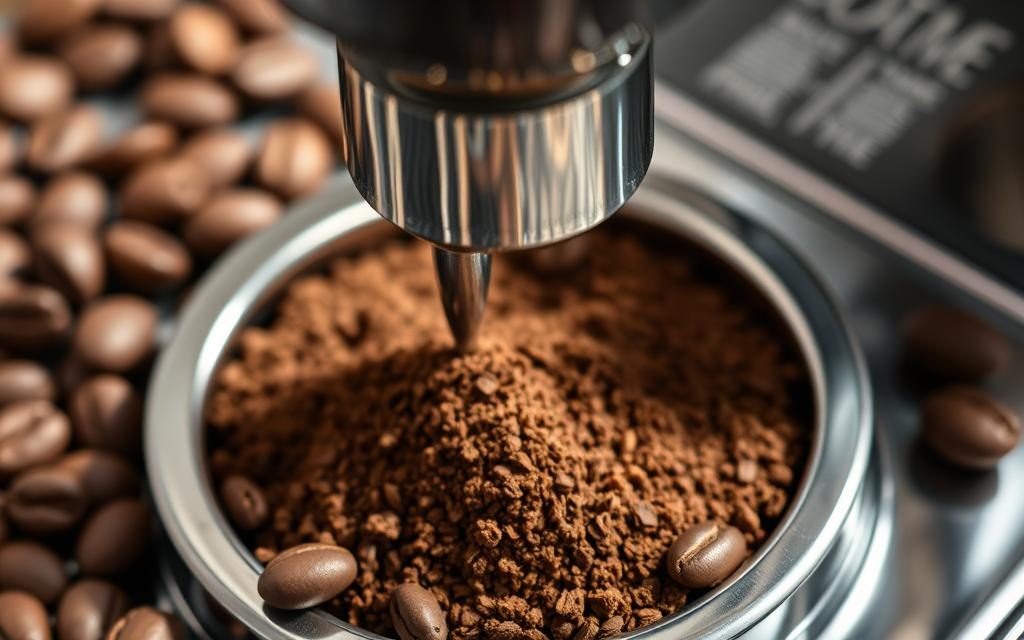
It’s about pressing coffee grounds down evenly in the portafilter. This makes a flat surface for water to flow through. The goal is a dense, even coffee bed for the best extraction.
Understanding Tamping Basics
Baristas say to press down with 20-30 pounds of force. This pressure makes a perfect coffee puck. It ensures the flavor and extraction are always good.
Proper Tamping Techniques
- Hold the tamper with a straight wrist and steady arm
- Apply even, consistent pressure
- Ensure the coffee bed is level and flat
- Use a calibrated tamper for precision
Common Tamping Mistakes to Avoid
- Uneven pressure: Can lead to channeling and inconsistent extraction
- Over-tamping: Restricts water flow and creates bitter shots
- Under-tamping: Results in weak, watery espresso
- Dirty portafilter: Prevents proper sealing and extraction
Getting good at tamping takes time. Begin by keeping your hand steady and pressing down evenly. This will help you make the perfect espresso shot.
Pulling the Shot
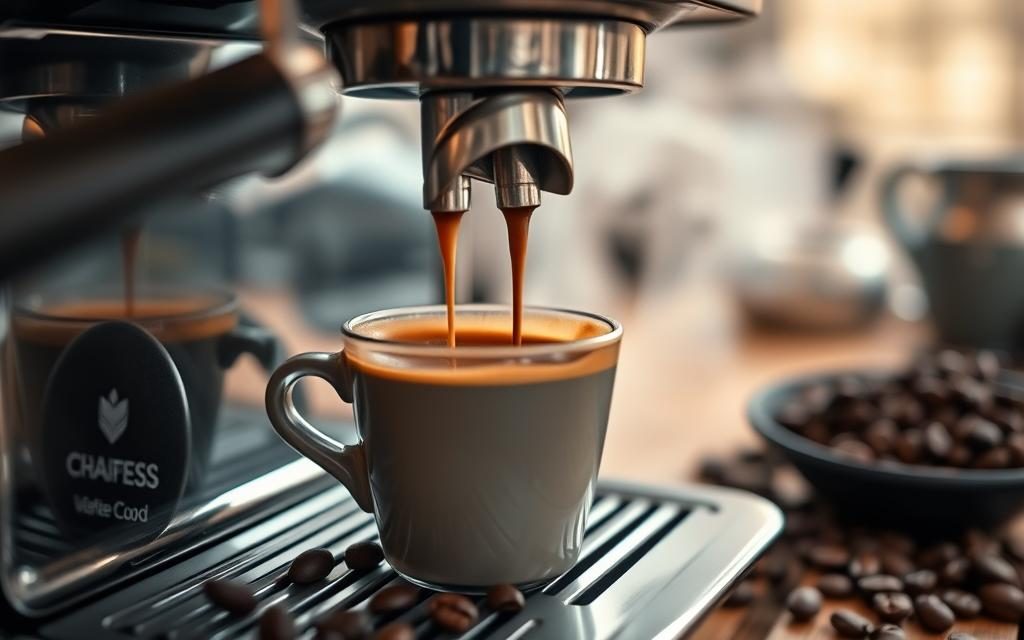
Pulling espresso shots is an art that needs precision and practice. The perfect shot depends on many things like extraction time, pressure, and technique. Professional baristas know it’s more than just pressing a button.
How Long Should It Take?
The ideal espresso extraction time is between 25-30 seconds. This time makes sure the shot is balanced and flavorful.
- Single shot extraction: 15-18 seconds
- Double shot extraction: 25-30 seconds
- Recommended coffee volume: 25-30ml for single shot
- Recommended coffee volume: 50-60ml for double shot
Understanding Shot Timing
Espresso extraction time is affected by many things. Grind size is key in how fast water goes through the coffee. Too coarse a grind means under-extraction, and too fine means over-extraction.
| Extraction Indicator | Recommended Action |
|---|---|
| Extraction under 25 seconds | Adjust grind to be finer |
| Extraction over 30 seconds | Make grind more coarse |
Signs of a Perfect Espresso Shot
A perfect espresso shot has certain signs. Look for a rich, golden-brown crema on top. This shows fresh beans and correct extraction. The aroma should be sweet and intense, without any bitter notes.
- Golden-brown crema
- Balanced flavor profile
- Rich, sweet aroma
- Consistent volume and weight
Mastering pulling espresso shots takes practice, patience, and detail. By knowing extraction time and recognizing a perfect shot, you’ll make great espresso soon.
Steaming and Frothing Milk
Milk steaming makes an espresso creamy and luxurious. It needs practice, precision, and knowing about milk types and temperatures.
Essential Tools for Milk Steaming
Baristas use special tools for perfect milk. The main tools are:
- Stainless steel milk pitcher
- Steam wand
- Thermometer
- Clean cloth for wiping steam wand
Microfoam Technique Mastery
Creating silky microfoam needs careful temperature control and steam wand placement. The best milk temperature is 140-145°F for the best taste and texture.
Here’s how to make microfoam:
- Start with cold milk and a cold pitcher
- Position steam wand at a 45-degree angle
- Create a consistent whirlpool motion
- Stop steaming before milk reaches 160°F
Milk Alternatives for Espresso
Plant-based milks are popular for espresso. Each one needs a special steaming method.
| Milk Alternative | Steaming Characteristics | Temperature Sensitivity |
|---|---|---|
| Soy Milk | Steams quickly | Low heat tolerance |
| Almond Milk | Requires more stretching | Needs lower temperatures |
| Oat Milk | Best froth quality | Higher heat tolerance |
Try different brands of milk alternatives to find your favorite.
Adding Flavor: Syrups and Spices
Make your espresso special with more than just a shot. Flavored syrups can turn a simple drink into a tasty journey. Try making cafe-style drinks at home with the right syrups.
Popular Flavoring Options
Discover tasty espresso flavors with these syrups:
- Vanilla
- Caramel
- Hazelnut
- Pumpkin Spice
- Chocolate
How to Incorporate Flavors
When adding syrups to espresso, start small. Use 1-2 tablespoons per shot. This way, you won’t hide the espresso’s deep taste.
DIY Flavor Syrups for Espresso
Making your own syrups is simple. Here’s a recipe for a winter spice syrup:
| Ingredient | Quantity |
|---|---|
| Maple Syrup | 1 cup |
| Water | 1/2 cup |
| Cinnamon | 2 sticks |
| Nutmeg | 1/2 tsp |
To make it:
- Put all ingredients in a saucepan
- Simmer on low heat for 10-15 minutes
- Strain and cool
- Keep it in the fridge for up to 1 month
Did you know? Over 32% of coffee lovers like a bit of sweetness. Try mixing flavors to find your favorite espresso match.
Troubleshooting Your Espresso
Mastering espresso troubleshooting is key to perfect shots. Knowing common espresso problems helps fix them fast. This ensures a tasty brew every time.
Common Issues and Their Solutions
Espresso brewing can be tricky for home baristas. Here are common problems and fixes:
- Under-extracted Shots: Sharp, sour taste and thin body
- Over-extracted Shots: Bitter, burnt taste
- Weak crema formation
- Inconsistent shot volume
Adjusting Grind Size and Tamping
Fixing espresso issues needs precise adjustments:
- Check grind size: Too coarse is under-extracted, too fine is over-extracted
- Ensure consistent tamping pressure (about 30 pounds of pressure)
- Use a leveling tool for an even coffee bed
When to Call for Help
Some espresso machine problems need a pro. Watch for these signs:
- Persistent water leaks
- Unusual grinding noises
- Complete failure to heat or brew
- Electrical issues or strange smells
Regular maintenance prevents many problems. Clean your machine weekly, descale monthly, and replace worn parts to keep it working well.
Cleaning and Maintenance
Keeping your espresso machine clean is key for great coffee. Cleaning your espresso machine right is more than just wiping it down. It’s about keeping your coffee tasting good and your machine working well.
Importance of Regular Cleaning
Cleaning your espresso machine is not just for looks. If you don’t clean it, you might get:
- Worse coffee taste
- Machine problems
- More coffee oils and residue
- Shorter machine life
Daily Cleaning Essentials
Here’s what you should do every day to clean your espresso machine:
- Wipe the filter basket clean
- Clean the drip tray well
- Keep the steam wand clean
- Rinse portafilters after each use
Weekly and Monthly Maintenance Schedule
| Frequency | Cleaning Task | Recommended Product |
|---|---|---|
| Weekly | Backflush with water | Clean water |
| Monthly | Deep clean backflush | Urnex Cafiza Tablets |
| Bi-Monthly | Clean brewing group | Coffee oil remover |
Pro Maintenance Tips
Here are some professional-grade maintenance strategies to make your espresso machine last longer:
- Check water filtration system every two months
- Descale when performance drops
- Replace portafilter gasket if water leaks during extraction
- Clean grinder burrs monthly with special granules
Remember, cleaning regularly is the secret to keeping your espresso machine in top shape. Take good care of it, and it will give you amazing coffee every time.
Exploring Espresso-Based Drinks
Espresso drinks open a world of flavors and creativity for coffee fans. They range from classic to new recipes, showing espresso’s versatility. Making these drinks is an art, inviting coffee lovers to try new things.
There are 9 basic espresso-based coffees, each with its own taste. A macchiato mixes espresso with steamed milk. An Americano adds hot water to espresso. You can try a cappuccino, with 1/3 espresso and 2/3 milk foam, or a latte, with 1:3 espresso to milk.
Classic Espresso-Based Beverages
Espresso drinks go beyond simple recipes. Modern machines offer up to 40 coffee recipes, including vegan ones. You can make fancy drinks like brown sugar iced oat shaken espresso or homemade Irish coffee.
Adding special ingredients like pumpkin puree, vanilla bean, or orange liqueur can make a drink special. These ingredients can turn a simple espresso drink into a gourmet treat.
Creating Your Own Espresso Drinks
Making the perfect caffe latte takes practice and knowing how to make espresso. You might like a cortado, with equal parts espresso and milk, or a flat white, poured upside down. The goal is to mix espresso’s strong taste with milk’s smoothness.
With creativity and the right tools, anyone can become a home barista. They can make their own unique espresso drinks.


