
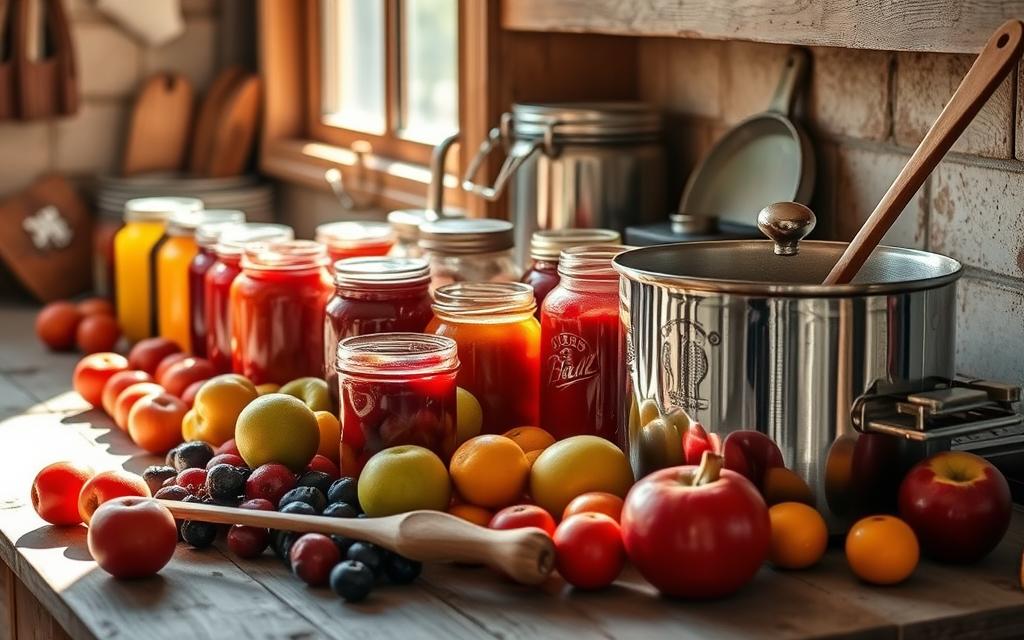
Ever wondered why homemade jam tastes better than store-bought? Making your own jam is more than a skill. It’s an art that turns simple fruits into tasty spreads.
Jam-making is back in style. Home cooks love making their own canning masterpieces. This guide will show you 9 yummy jam recipes to make your kitchen special.
Whether you’re new or experienced, we’ve got you covered. Our canning tips and tricks will help you make perfect jam every time. Try classic strawberry or mix fruits for something new. These recipes will spark your creativity in the kitchen.
Key Takeaways
- Learn 9 unique jam recipes from classic to innovative
- Master essential canning instructions for perfect preserves
- Understand how different fruits impact jam consistency
- Discover tips for balancing sugar and pectin levels
- Explore creative ways to enhance homemade jam flavors
Introduction to Jam-Making
Jam-making is a long-standing tradition. It turns fresh fruits into tasty fruit preserves. This tradition connects us to our ancestors who preserved food with skill and creativity.
What is Jam?
Homemade jam is a sweet fruit preserve. It’s made by cooking fresh fruits with sugar. This makes it spreadable and delicious. Unlike store-bought jam, you can control what goes into it.
The History of Jam-Making
Jam-making has been around for centuries. Early people used honey to preserve fruits. This made sweet spreads that helped communities during hard times. Jam-making has kept food and memories alive for generations.
Why Make Your Own Jam?
There are many reasons to make your own jam:
- You have full control over what you use.
- You avoid additives found in store-bought jam.
- It’s cheaper than buying jam.
- You can try new flavors.
Home cooks often make 24 jars of jam a month. Each batch makes 6 small jars. They make jam 4 times a month during peak season to have plenty.
| Jam-Making Metric | Average Value |
|---|---|
| Fruit per Batch | 1 kg |
| Jars per Batch | 6 small jars |
| Monthly Production Goal | 24 jars |
| Recommended Batch Frequency | 4 times per month |
If you love making jam, check out the River Cottage Handbooks. They have great tips. Raspberry jam is easy to make, needing equal parts fruit and sugar.
Choosing the Right Fruits for Jam
Making homemade jam starts with picking the right fruits. The fruit you choose can make your jam great. Knowing how to pick the best fruits is key to making a wonderful jam.
Seasonal Fruits: Nature’s Best Jam Ingredients
Seasonal fruits give the best flavors and nutrients for jam. Here are some top picks:
- Summer: Strawberries, raspberries, cherries
- Fall: Apples, pears, plums
- Spring: Apricots, rhubarb
Understanding Fruit Ripeness
Fruit ripeness is very important for jam. Fruit ripeness affects taste and pectin. For the best jam:
- Choose fruits that are ripe but not too ripe
- Mix underripe and ripe fruits
- Don’t pick fruits with bruises or soft spots
Organic vs. Conventional Fruits
You’ll find two main types of fruits: organic fruits and conventional fruits. Organic fruits are grown without harmful chemicals. Conventional fruits might have chemicals on them.
| Organic Fruits | Conventional Fruits |
|---|---|
| No synthetic pesticides | May contain pesticide residues |
| Higher cost | Generally less expensive |
| Often more flavorful | Widely available |
Wash fruits well, no matter what you choose. The goal is to pick fresh, quality fruits for your homemade jam.
Essential Tools for Jam-Making
Making homemade jam needs special kitchen tools. The right tools make jam-making fun. Having the right tools helps make tasty preserves.
Required Kitchen Equipment
For jam-making, you need some key kitchen items:
- Large, heavy-bottomed pot for even heat
- Wooden spoon for stirring
- Potato masher for fruit
- Digital or candy thermometer for temperature
- Wide-mouth funnel for jar filling
Must-Have Utensils for Jam-Making
Special tools make jam-making easier. Here are some tools to get:
- Jar lifter for hot containers
- Canning tongs for jars
- Sterilization rack for jars
- Metal ladle for jam
Storage Options for Jams
Storing jam right keeps it fresh longer. Use glass jars with tight lids. Homemade jam can last up to two years if stored right.
| Storage Location | Duration | Condition |
|---|---|---|
| Pantry (Sealed) | Up to 2 years | Cool, dark place |
| Refrigerator (Opened) | 3 months | Tightly sealed |
Good tools and storage tips make tasty jam all year.
Understanding the Jam-Making Process
Making homemade jam is a mix of art and science. It needs careful prep, exact cooking, and lots of detail.

Starting with the right ingredients is key. Picking the best fruits is important for tasty flavors.
Steps to Prepare Your Ingredients
- Choose fresh, slightly underripe fruits with high pectin content
- Wash fruits thoroughly to remove dirt and debris
- Remove stems, pits, and unwanted parts
- Cut or mash fruits to desired consistency
Cooking and Cooling Process
Cooking jam right means balancing heat and ingredients. Slow cooking brings out deep flavors.
| Cooking Method | Duration | Recommended Fruits |
|---|---|---|
| Slow Cooking (Maceration) | 30-60 minutes | Plums, Peaches, Apricots |
| Quick Cooking | 10-20 minutes | Strawberries, Raspberries |
The Importance of Sterilization Techniques
Good sterilization keeps jam fresh and safe. Clean jars and careful canning keep your jam yummy.
- Clean jars with hot, soapy water
- Sterilize jars in boiling water for 10 minutes
- Dry jars completely before filling
- Process half-pint jars at a steady boil for 10 minutes
Pro tip: Store your finished jams in a cool, dark place to maintain optimal flavor and quality.
Basic Jam Recipe with Sugar
Making a tasty sugar-based jam is like a fun art project. It mixes simple things with special ways to do them. This basic jam recipe will help you make a yummy spread from fresh fruits. It’s like capturing summer’s sweetness in a jar.
Ingredients for Your Jam-Making Adventure
Choosing the right stuff is key to making the best jam. Here’s what you need:
- 4 pounds of ripe strawberries
- 1 package (1.75 ounces) of low-sugar pectin
- 4 cups of granulated sugar
- 2 tablespoons of fresh lemon juice (optional)
Step-by-Step Jam-Making Instructions
- Wash and hull the strawberries carefully
- Mash the fruits well to get the natural pectin out
- Put the fruit and pectin in a big, wide pan
- Heat it up until it boils hard
- Add sugar and cook for 10-12 minutes
- Do the wrinkle test to see if it’s ready
Jam-Making Tips for Success
| Tip | Description |
|---|---|
| Fruit Selection | Choose fruits that are ripe and look good |
| Sugar Ratio | Use 2 parts fruit to 1 part sugar by weight |
| Cooking Temperature | Get to 220°F (104°C) to set the jam |
| Storage | Keep it in the fridge or can it for up to 12 months |
Pro tip: Use a wide, shallow pan for faster evaporation and the best jam.
Your homemade jam will make about 5-6 cups. It’s great for sharing with loved ones. The secret to a fantastic jam is patience, practice, and loving to make something special.
Low-Sugar Jam Recipes
Jam lovers can find joy in low-sugar jam recipes. These recipes make traditional preserves healthier. They let you enjoy fruit spreads without too much sugar.
Why Consider Low-Sugar Options?
Healthy jam options are great for those who care about their health. Low-sugar jam lets the fruit’s natural taste come through. It also cuts down on calories.
Sugar alternatives help with:
- Blood sugar levels
- Calorie consumption
- Overall nutritional profile
Low-Sugar Strawberry Jam Recipe
Make a tasty low-sugar jam with fresh strawberries. You’ll need:
- 5 cups prepared strawberries
- 5 tablespoons low-sugar fruit pectin
- 1 cup water or sugar-free fruit juice
- 1 cup honey (optional)
This recipe makes about 5 half-pint jars. Pro tip: Using honey can save over 5000 calories per batch compared to traditional sugar-heavy recipes!
Low-Sugar Apricot Jam Recipe
Apricot jam can also be made healthier. Use ripe apricots and follow the strawberry jam recipe steps.
Here’s how to store your homemade jam:
- Refrigerate for up to 2 months unopened
- Consume within 1 month after opening
- Store in cool pantry conditions between 50-70°F
Choosing low-sugar jam recipes lets you enjoy tasty preserves. You’ll also make better nutritional choices.
Incorporating Spices and Extracts
Making your jam special needs creativity. Spices and extracts can make simple jam into something amazing. They make your jam taste great and surprise your guests.
Popular Spices to Enhance Flavor
Spiced jam lets you explore new tastes. Here are some spices that make jam better:
- Cinnamon: Adds warmth to apple and stone fruit jams
- Ginger: Gives a zesty kick to tropical fruit jams
- Cardamom: Adds an exotic twist to pear and plum jams
- Star anise: Brings a sophisticated taste to berry jams
Vanilla Bean and Other Extracts
Vanilla bean jam makes fruit preserves fancy. The seeds add a rich, aromatic flavor. Try these unique jam flavors:
- Pure vanilla bean for berry jams
- Lavender extract in strawberry preserves
- Rosemary infusion for peach jam
Unique Spiced Jam Recipes
Try new spice mixes for special jam flavors. Here are some ideas:
- Pear jam with vanilla and cardamom
- Spiced plum preserve with cinnamon and orange zest
- Apricot jam with ginger and nutmeg
Remember, the right spice mix can make your jam a hit. Start small and adjust to taste.
Experimenting with Mixed Fruit Jam
Making mixed fruit jam is fun. It turns simple fruits into tasty spreads. You can mix fruits to create unique flavors that excite your taste buds.
Choosing Complementary Fruits
Choosing the right fruits is key for great jam. Here are some tips:
- Match fruits that ripen at the same time
- Balance sweet and tart flavors
- Think about pectin for the right jam texture
- Try using summer fruits
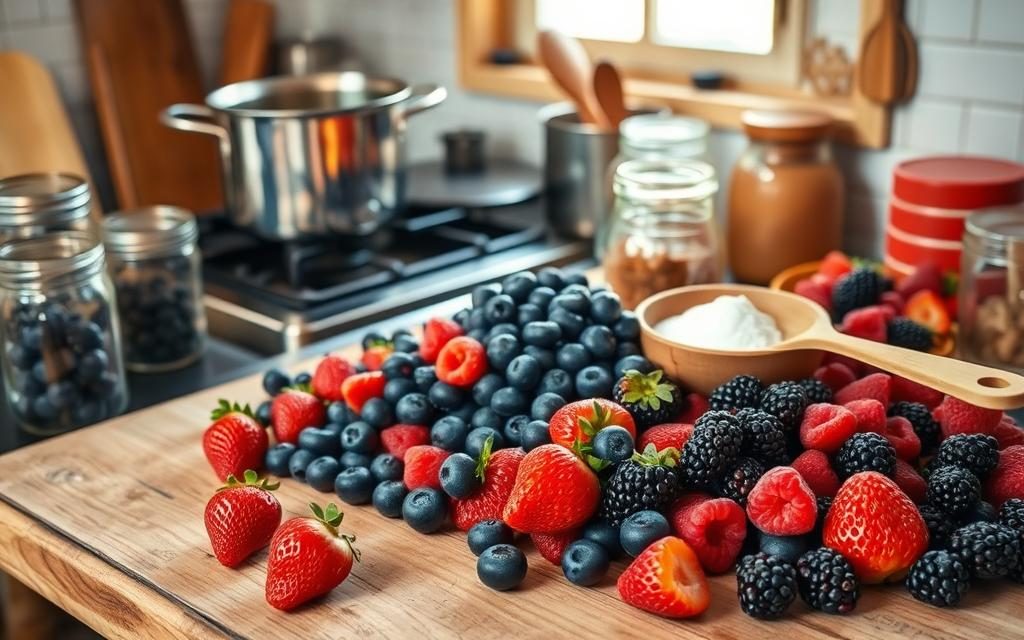
Recipe for Mixed Berry Jam
Our mixed fruit jam recipe is a mix of summer berries. It uses tested ingredients for the perfect jam.
- Fruit to sugar ratio: 70% to 30%
- Berries: Strawberries, blueberries, raspberries, blackberries
- Batch size: Up to 4.5 kg (10 pounds)
- Shelf life: 6 months in the fridge, over 1 year frozen
Tips for Flavor Balancing
Getting the flavor right in mixed fruit jam is important. Here’s how to do it:
- Add lemon juice for sweetness
- Use honey for tart fruits
- Try nH pectin for thickening
- Adjust sugar based on fruit ripeness
Tip for berry jam fans: Frozen fruits are great. But, they might take longer to cook. Cut big frozen fruits into small pieces for even cooking.
Preserving Your Homemade Jam
Making homemade jam is a fun art. But, it’s important to store and preserve it right. This keeps your jam tasty and safe to eat.
Best Practices for Jam Storage
Storing jam right is key. Here are some tips:
- Store unopened jams in a cool, dark place
- Keep jams away from direct sunlight and heat sources
- Use clean, sterilized glass jars for storage
- Refrigerate after opening
- Consume refrigerated jam within 1-3 months
Detecting Jam Spoilage
It’s important to know when jam goes bad. Look out for these signs:
- Visible mold growth
- Unusual or off-putting odors
- Significant color changes
- Altered texture or consistency
- Fermented or sour smell
Freezing vs. Canning: Preservation Methods Compared
Freezing or canning depends on your needs and what you have.
| Preservation Method | Pros | Cons |
|---|---|---|
| Freezing Jam | Maintains fresh flavor | Requires freezer space |
| Canning Methods | Longer shelf-stable storage | More complex preparation |
| Water Bath Canning | Best for high-acid jams | Requires specific equipment |
For water bath canning, follow the Ball® Blue Book. It says to process jams for 10 minutes. Also, leave two inches between jars while cooling. This way, your homemade jams can last up to 18 months in a cool, dark, dry place.
Creative Ways to Use Your Jam
Homemade jam is more than just for toast. It can make simple dishes special. Let’s look at fun ways to use your jam.
Baking with Jam: Sweet Inspirations
Baking with jam makes desserts yummy. Try these recipes:
- Create thumbprint cookies with a dollop of jam in the center
- Use jam as a decadent filling for layer cakes
- Swirl jam into muffin or quick bread batters
- Craft jam-topped tarts and pastries
Jam as a Culinary Condiment
Jam can make both sweet and savory dishes better. Try these ideas:
- Pair fruit jams with artisan cheeses
- Spread savory jams on gourmet sandwiches
- Create unique charcuterie board accompaniments
Unique Cooking Ideas Using Jam
Jam can add new flavors to your meals. Try these ideas:
- Use jam as a glaze for roasted meats
- Develop complex barbecue sauce bases
- Enhance salad dressings with fruity notes
- Mix jam into yogurt or oatmeal for instant flavor
21% of recipes use jam in baking. 11% use it in savory dishes. Homemade jam lasts a year if stored right. It’s great for many dishes.
Troubleshooting Common Jam-Making Issues
Jam-making can be tricky, even for experts. Knowing how to fix common problems makes perfect preserves easy. Here are tips for runny jam and sweetness issues.
What to Do If Your Jam Is Runny
Fixing runny jam is simple. Try these methods:
- Recook the jam with more pectin to set it
- Simmer it down to reduce the mixture
- Add commercial pectin for fruits low in pectin
Be careful not to overcook. This can ruin the jam’s taste and texture. A jam preservation guide suggests cooking to 220 degrees Fahrenheit.
Adjusting Sweetness in Your Jam
Too sweet jam can be a problem. Here’s how to fix it:
- Add lemon juice to balance the sweetness
- Use more tart fruits to balance the flavor
- Use less sugar in future batches
Other Common Jam-Making Pitfalls
Staying alert to common problems is key. Watch out for:
- Crystallization from bad sugar mixing
- Cloudy jam from too much stirring
- Spillage from bad sealing
Pro jam makers use precise techniques and pick ingredients carefully. With these tips, you’ll make delicious jam every time.
FAQs About Making Jam
Home jam-making can seem mysterious. But, knowing a few key details can make you a confident preserver. Jam lovers often wonder about shelf life, fruit selection, and ingredient needs.
How Long Does Homemade Jam Last?
Jam shelf life depends on how you make and store it. Properly canned jam can last up to 18 months in a cool, dark pantry. Once opened, keep it in the fridge and eat it within 1-3 months for the best taste and safety.
Can You Use Frozen Fruit?
Using frozen fruit for jam is a great choice, even when fresh fruit is hard to find. Frozen fruits are often picked at the best time and can give better flavor and texture than out-of-season fresh fruits.
Do You Need Pectin for Jam?
Pectin isn’t always needed for jam. Some fruits have a lot of pectin and can set on their own. Fruits like apples, citrus, and berries usually set well. But, fruits with less pectin might need:
- Added pectin
- Longer cooking times
- Combining with high-pectin fruits
| Fruit Type | Pectin Level | Setting Ability |
|---|---|---|
| Apples | High | Excellent |
| Strawberries | Low | Needs Help |
| Raspberries | Moderate | Good |
Try different fruits and methods to get better at jam-making. Remember, practice makes perfect!
Conclusion and Final Tips
Starting to make jam takes patience and creativity. These tips will help you make tasty preserves from simple fruits. Each batch is a chance to get better at cooking.
Trying new jam recipes is fun. Begin with a basic blueberry jam recipe. Then, add special touches like vanilla or cinnamon. A $6 digital scale from Amazon helps with exact measurements.
There are many resources to learn more about jam-making. Look for local classes, online groups, and cookbooks. Remember, making jam is all about practice and learning.
Your homemade jams can last up to 18 months. This makes them great gifts and keeps your pantry stocked. With hard work and creativity, you’ll become a pro at making jam.


