
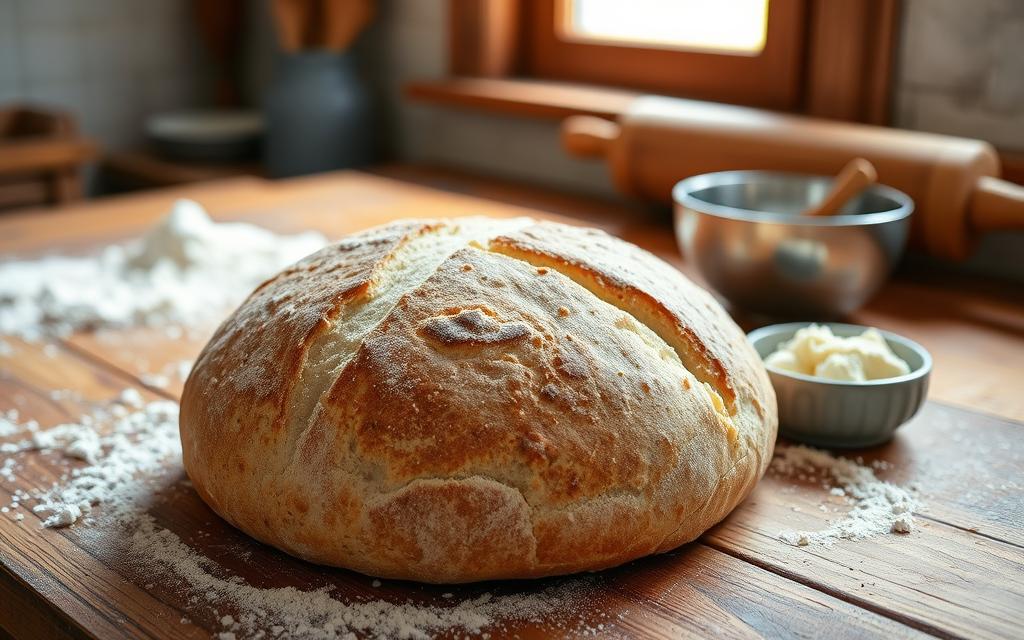
Want to turn your kitchen into a real bakery? Making homemade sourdough bread is simpler than you think.
Learning to make sourdough bread is a fun journey. It connects you to a long tradition of bread-making. This recipe uses just a few ingredients but packs a lot of taste and health benefits.
Homemade sourdough bread is more than baking. It’s about a special process that turns simple things into a tasty, healthy loaf.
Key Takeaways
- Sourdough bread needs only three basic ingredients
- The fermentation process makes it healthier
- Homemade bread lets you control what goes in it
- With practice, anyone can make great sourdough
- Sourdough is easier to digest than store-bought bread
Introduction to Sourdough Bread
Sourdough bread is a special kind of bread. It’s made with old baking ways and has great taste and health benefits. It’s different from other breads because of how it’s made and its unique flavor.
What is Sourdough Bread?
Sourdough bread is made naturally. It doesn’t use packaged yeast like other breads. Instead, it uses a starter with wild yeasts and good bacteria. These help make the bread tangy and light.
A Brief History of Sourdough
Sourdough bread has been around for thousands of years. Ancient people, like the Egyptians, found out how to make it rise naturally. Bakers have shared tips for making sourdough for generations.
- Oldest known sourdough bread dates back to 3700 BCE
- Widely used by Egyptian and Mediterranean cultures
- Pioneers and gold rush settlers relied on sourdough starters
Health Benefits of Sourdough
Sourdough bread is good for you. Its special way of making it breaks down gluten and phytic acid. This makes nutrients easier for our bodies to use.
| Nutrient | Benefit |
|---|---|
| Probiotics | Supports digestive health |
| Lower Glycemic Index | Helps regulate blood sugar |
| Enhanced Mineral Absorption | Increases bioavailability of nutrients |
Learning to make sourdough takes time and effort. But, it’s worth it for the tasty, healthy bread. It connects us to a long history of baking.
Ingredients Needed for Sourdough Bread
Making sourdough bread is all about the right ingredients. The secret to a great loaf is using top-notch parts. They all come together to make something amazing.
Essential Ingredients for the Starter
Your sourdough adventure starts with just two things:
- Flour: Organic bread flour is best. It has 11.7% to 12.7% protein.
- Water: Use filtered water at room temperature. It keeps your starter healthy.
Additional Ingredients for the Dough
For the dough, you’ll need a few more things:
- Active sourdough starter (190g)
- Purified room temperature water (780g)
- Organic bread flour (1060g)
- Fine artisan sea salt (4 teaspoons)
Tip for making sourdough: Use the best ingredients. Good flour is key. Try Central Milling Artisan Baker’s Craft Plus or King Arthur all-purpose flour.
| Ingredient | Quantity | Purpose |
|---|---|---|
| Bread Flour | 1060g | Provides structure and protein |
| Water | 780g | Hydrates the flour and activates fermentation |
| Sea Salt | 4 teaspoons | Enhances flavor and controls fermentation |
Creating sourdough bread needs patience and quality ingredients. Your bread will be grateful for the care you put into it!
Understanding Sourdough Starter
Creating a sourdough starter is the first step in making sourdough bread. It’s a mix of flour and water that turns simple ingredients into tasty, tangy bread.
What is a Sourdough Starter?
A sourdough starter is a mix of flour and water that has wild yeasts and good bacteria. These tiny helpers make sourdough bread special. They give it a unique flavor and make it rise.
How to Create a Sourdough Starter
Making a sourdough starter takes patience and care. Here’s what to do:
- Mix equal parts flour and water in a clean jar
- Use a mix of 70% white flour and 30% whole-grain rye flour
- Keep the starter at 80°F (26°C)
- Feed the starter every day
Feeding Your Sourdough Starter
Feeding your starter right is key. Here’s how to do it:
- Feed it twice a day, every 12 hours
- Use a 1:1:1 ratio of starter, flour, and water
- Keep it hydrated at 90-100%
Watching your starter grow is important. A healthy starter will grow big and pass the “float test”. This means it floats in water.
Preparing the Dough
Baking sourdough bread is like art. It starts with picking the right ingredients. Making a perfect sourdough loaf takes patience and focus.
Both pro bakers and home cooks know the prep stage is key. It’s where you make a delicious, traditional sourdough bread.
Mixing the Essential Ingredients
Starting with sourdough bread is about choosing the right stuff. Here are the main things you need:
- 100g active sourdough starter
- 394g high-protein bread flour
- 250g filtered water
- 8g kosher salt
Advanced Kneading Techniques
Kneading sourdough is special. It’s not like regular bread. You use a stretch and fold method.
This method makes the dough strong without overworking it. It gives the bread a deeper flavor.

Understanding Autolyse: A Critical Resting Period
The autolyse is a big deal in sourdough. It lets flour and water rest with starter and salt. This makes the dough better.
It makes the bread softer and easier to digest. This is a game-changer for sourdough.
| Preparation Stage | Duration | Purpose |
|---|---|---|
| Initial Mixing | 10-15 minutes | Combine ingredients |
| Autolyse | 30-60 minutes | Hydrate flour, develop gluten |
| Stretch and Fold | 2-3 hours | Build dough strength |
Learning these tips will change your baking. You’ll make loaves that taste amazing and feel great.
Fermentation Process
Learning about sourdough is key to making tasty bread. Fermentation turns simple stuff into a tasty loaf. It makes the bread’s flavor and texture special through biology.
Bulk Fermentation: Building Flavor and Structure
Bulk fermentation is a big deal in sourdough. It’s when the dough gets its flavor and strength. The best temperature for this is 80–90°F (27–32°C).
- Temperature affects how fast it ferments
- Every 15°F up, it ferments twice as fast
- It usually takes 5-7 hours
Importance of Stretch and Fold Technique
The stretch and fold method is very important. It helps make the dough strong and even.
- Do 3 stretch and folds
- Do them 30 minutes apart
- Stretch gently so you don’t tear it
Recognizing Proper Fermentation
Knowing when your dough is ready is important. Look for these signs of good fermentation:
| Fermentation Indicator | What to Look For |
|---|---|
| Volume Increase | Dough should rise 50-75% |
| Bubbles | Small bubbles all over the dough |
| Texture | It should be soft, puffy, and a bit jiggly |
Pro tip: The temperature around you affects how fast it ferments. Warmer places make it go faster, cooler places make it slower.
Shaping the Dough
Learning to shape sourdough bread is key to making great bread. It turns your dough into a beautiful, structured loaf. This loaf looks good and feels great.
Shaping is more than looks. It builds tension, structure, and affects the bread’s look and feel.
Essential Shaping Techniques
Professional bakers use special ways to shape sourdough:
- Gentle handling to keep air bubbles
- Folding edges to make surface tension
- Using a bench scraper for precision
- Working on a lightly floured surface
Popular Sourdough Loaf Shapes
Artisan sourdough bread comes in two main shapes:
- Boule: A round, classic French-style loaf
- Batard: An oval-shaped loaf with elegant proportions
Each shape needs special techniques. Boules are good for beginners. Batards are for those who want to try more.
Practical Shaping Tips
To make the best sourdough bread, remember these tips:
- Work quickly but gently
- Use consistent folding motions
- Aim for smooth, taut surface
- Practice develops muscle memory
With practice, you’ll get better at making beautiful sourdough loaves at home.
Proofing Your Bread
Sourdough bread proofing is a key step. It turns your dough into a light, airy treat. Knowing how to proof makes your sourdough even better.
Understanding the Proofing Process
Proofing is the last rise before baking. It makes your sourdough taste complex and feel special. Yeast and bacteria make bubbles that make it light.
Proofing Time and Temperature
Temperature and timing are key. Warm proofing takes 1.5 to 3 hours at 75-78°F. Cold proofing, in the fridge, lasts 8 to 16 hours.
- Warm proofing: 1.5-3 hours
- Cold proofing: 8-16 hours
- Ideal proofing temperature: 74-76°F
Banneton vs. Bowl Proofing
There are two ways to proof: with a banneton basket or a bowl. Bannetons make pretty patterns and keep the dough shape. Bowls are easy for home bakers.
| Proofing Method | Characteristics |
|---|---|
| Banneton Proofing | Creates decorative patterns, supports dough structure |
| Bowl Proofing | Simple, accessible, works with standard kitchen tools |
Check if your dough is ready with a finger poke test. If it springs back slowly, it’s ready to bake.
Baking Sourdough Bread
Baking sourdough bread is all about precision and passion. The final steps can turn your dough into a beautiful, crusty bread.
Preheating the Oven
Start by getting your oven ready. Heat it to 425°F. This makes sure it’s hot and even for the best bread.
Using a Dutch Oven
A Dutch oven is key for a great crust. It traps moisture, making the bread’s outside crispy and golden.
- Put the Dutch oven in the oven while it’s heating up
- Use parchment paper to move the dough easily
- Put the scored dough into the hot Dutch oven carefully
Baking Times and Temperatures
Being precise is important in baking sourdough. Here are some tips for perfect bread:
| Baking Stage | Temperature | Duration |
|---|---|---|
| Covered Baking | 425°F | 20 minutes |
| Uncovered Baking | 425°F | 25-30 minutes |
Your bread is done when it’s 208°F inside and looks golden. Pro tip: Let the bread cool for 2 hours before slicing for the best texture.
Cooling and Storing
Learning how to store sourdough bread is key. It keeps the bread’s special taste and texture. The right cooling and storage methods can make your bread last longer.
The Importance of Proper Cooling
After baking, your sourdough needs to cool down. Let it cool on a wire rack for 1-2 hours. This step stops the bread from being too soft inside. It also keeps the bread’s texture and taste just right.
Best Practices for Sourdough Bread Storage
- Store at room temperature in a bread box or paper bag
- Keep bread fresh for 2-3 days on the counter
- Slice and freeze for extended preservation
Storage Methods Comparison
| Storage Method | Duration | Recommended for |
|---|---|---|
| Room Temperature | 2-3 days | Short-term storage |
| Freezing | Up to 3 months | Long-term preservation |
| Refrigeration | Not recommended | Accelerates staling |
Freezing and Reheating Tips
For long-term storage, slice the bread before freezing. Wrap each slice in plastic wrap or use a freezer bag. To enjoy, reheat in a toaster or toaster oven for a fresh taste.
Pro tip: The bread’s natural acidity helps prevent mold, keeping your sourdough fresher longer compared to commercial breads.
Troubleshooting Common Issues
Sourdough bread can be tricky to make. Knowing common problems helps make it fluffy and crusty. Let’s look at the most common issues and how to fix them.

Dense Sourdough: Identifying and Solving Texture Problems
Dense sourdough comes from a few main reasons. Bakers can fix these with the right techniques and knowledge:
- Insufficient gluten development
- Weak or inactive starter
- Inadequate fermentation time
- Incorrect hydration levels
Solutions for Dense Bread Texture
To make fluffy sourdough, try these tips:
- Do more stretch and fold during bulk fermentation
- Make sure your starter is active and healthy
- Give it enough time to proof
- Use a kitchen scale for exact measurements
Managing Sourdough Bread Crust Challenges
Getting the perfect sourdough crust is hard. But, there are ways to get the crust you want:
| Desired Crust | Technique |
|---|---|
| Crispy Crust | Increase oven temperature, add steam |
| Softer Crust | Reduce baking temperature, brush with butter |
| Golden Brown | Use egg wash, bake at consistent temperature |
Addressing Flavor Imbalances
Too sour sourdough can be fixed by:
- Reducing fermentation time
- Using less starter in your recipe
- Maintaining a consistent feeding schedule
- Keeping starter at a stable temperature
Remember, practice makes perfect in sourdough bread baking. Every loaf is a chance to learn and get better.
Variations to Try
Exploring sourdough bread variations lets bakers get creative. They can turn traditional sourdough into unique dishes. Sourdough’s flexibility means endless chances to try new flavors and textures.
Adding Seeds and Nuts for Texture
Make your sourdough bread more interesting by adding seeds and nuts. Artisan sourdough bread recipes suggest using:
- Sunflower seeds
- Pumpkin seeds
- Walnuts
- Rolled oats
- Chia seeds
Incorporating Herbs and Spices
Change your sourdough bread with herbs and spices. Try these tasty mixes:
- Rosemary and sea salt
- Thyme and black pepper
- Oregano and garlic
- Sage and roasted garlic
Sweet Sourdough Options
If you love sweets, sourdough can be made into dessert loaves. Here are some ideas:
| Sweet Variation | Key Ingredients |
|---|---|
| Cinnamon Raisin | Ground cinnamon, raisins |
| Chocolate Chip | Dark chocolate chunks |
| Honey Walnut | Honey, chopped walnuts |
Pro tip: When adding dry ingredients, slightly adjust the hydration of your dough. This keeps its structure and ensures a perfect bake.
Tools and Equipment
Making perfect sourdough bread needs more than skill and love. The right tools make baking fun. Whether you’re new or experienced, good equipment is key for tasty loaves.

Must-Have Sourdough Bread Essentials
Every sourdough baker needs basic tools for great bread. Here are the must-haves:
- Digital Kitchen Scale: The OXO Good Grips Stainless Steel Food Scale ($56) helps measure ingredients right.
- Dutch Oven: The Lodge Combo Cooker (under $40) cooks bread with a perfect crust.
- Bench Scraper: It helps with sticky dough and cleaning.
- Lame or Razor Blade: You need it for scoring bread ($13 on Amazon).
- Large Mixing Bowl: Use glass or stainless steel ones.
Optional Tools to Enhance Your Sourdough Process
These tools are nice to have but not necessary:
- Banneton Proofing Baskets: They help shape and dry dough ($37-$40).
- Danish Dough Whisk: It makes mixing easier ($10).
- Bread Proofer: Keeps temperatures steady ($115-$219).
- Baking Stone: It makes your oven better ($129).
- Spray Bottle: Creates steam for baking.
Good sourdough tools don’t have to cost a lot. Start with basics and add more as you get better.
Frequently Asked Questions
Baking sourdough bread can be tricky. Many questions come up along the way. This section will help with common sourdough starter tips and troubleshooting.
How Long Does Sourdough Last?
Fresh sourdough bread doesn’t last long. It stays good for 2-3 days at room temperature. Putting it in the fridge can make it last a week.
To keep it for months, freeze it. Pro tip: Always wrap the bread tightly to preserve its moisture and flavor.
Can I Use All-Purpose Flour?
All-purpose flour works, but bread flour is better. Bread flour has more protein for a stronger gluten network. When making a sourdough starter, consider these flours:
- Bread flour (highest recommended)
- All-purpose flour (acceptable alternative)
- Whole wheat flour (adds complexity)
- Rye flour (boosts fermentation)
What If My Starter Is Not Bubbling?
A non-bubbling starter is a problem. Several things can stop it from bubbling:
- Temperature: Ideal range is 76-82°F (24-26°C)
- Feeding frequency: Might need more regular feedings
- Flour quality: Use unbleached, organic flour
- Water type: Use unchlorinated water
Be patient. A new starter can take up to two weeks to be active. Keep feeding it regularly and keep the temperature right for fermentation.
Conclusion
Starting to make homemade sourdough bread is more than baking. It’s an art that connects you to old traditions. Each loaf shows your skill, patience, and love for sourdough.
Celebrating Your Sourdough Success
Your sourdough journey is full of learning and fun. Remember, every baker starts with curiosity and determination.
- See mistakes as chances to learn
- Write down your baking adventures
- Share your bread with loved ones
- Keep getting better at making bread
Experimenting with Flavors and Techniques
Homemade sourdough bread offers endless chances to try new things. Feel free to mix different flours, change how wet the dough is, and add special ingredients like herbs or seeds.
- Try mixing different flours
- Play with how you cut the bread
- Change how long you let it rise
- Try new mix-ins
Your Ongoing Sourdough Adventure
Every loaf you make shows how much you’ve improved. Practice, patience, and passion are key to getting better at sourdough. Your starter will get stronger, your skills will grow, and your bread will taste amazing.
Additional Resources
Exploring sourdough bread is a journey that never ends. The internet is full of great resources to help you get better. You can find books by experts and join online groups to learn more.
Books like “Tartine Bread” by Chad Robertson and “Flour Water Salt Yeast” by Ken Forkish are great. They teach you a lot about sourdough baking. Online, places like r/Sourdough on Reddit and The Fresh Loaf forums are full of bakers sharing tips and recipes.
Websites like King Arthur Flour, The Perfect Loaf, and Breadtopia have lots of tutorials and recipes. About 65% of bakers look for online help. These sites are perfect for both new and experienced bakers.
Using these resources can really help your sourdough journey. You’ll learn a lot and meet other bakers. So, dive in, try new things, and enjoy making sourdough bread.


